
Remedies to the Indonesian market
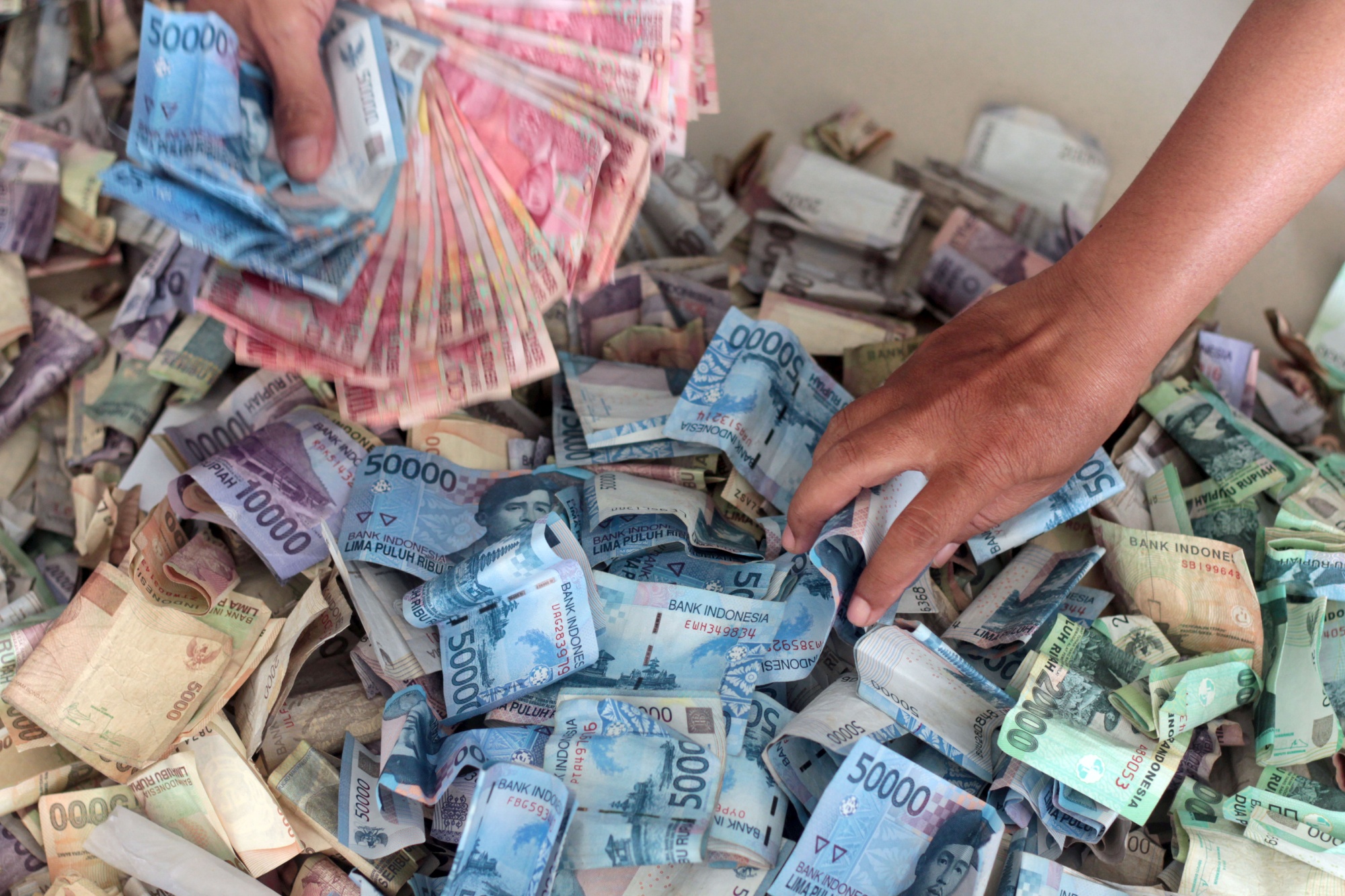
While Indonesia continues to attract global investments, the country’s recent conundrums is exerting great pressure on local assets.
On paper, Indonesia’s recent inclusion into the BRICS+ circle and membership into the G20 may seem to represent the ASEAN market in the global stage. Both organisations provide the country with greater access to capital, trade, and investment opportunities. However, despite Indonesia’s abundant natural resources and large domestic market, it has yet to reach the level of Singapore, Malaysia, and Vietnam in attracting foreign investments. On top of the “stock frying” issue that has led to the purging of Indonesian stocks from MSCI’s global roster, a recent corruption case involving tech tycoon and former Education Minister Nadiem Makarim has interrupted the country’s FDI momentum and the rebuilding of market confidence. However, the larger concern lies on the relationship between business leaders and the state.
The Indonesian rupiah has also depreciated by as much as 8 per cent year-to-date, turning into one of the worst-performing currencies in Asia despite the country’s vast economic potential. Indonesia’s central bank and national government must stay proactive in implementing policies to lift the competitiveness of the rupiah and of the domestic business environment, otherwise, it will continue to erode investor confidence and threaten Indonesian asset valuations.
Building back market confidence
Although foreign investors are reluctant to invest in Indonesia for now, the government is still optimistic that investment pledges will be fulfilled in line with its 2026 Work Plan. Looking at Graph 1, investment realisation amounted to USD 15.14 billion during the quarter that mainly went into infrastructure and manufacturing. Still, Indonesia has some catching up to do if it wants to reach its IDR 2.04 quadrillion (USD 114.62 billion) target for 2026.

One would also notice that the manufacturing sector has been the favoured destination by foreign capital in the past few years. This makes the sector the backbone of Indonesia’s economy, contributing the highest share to GDP at 19.07 per cent. This is no surprise as manufacturing is interconnected with other segments such as textiles, chemicals, and food and beverages. For investors, taking positions in manufacturing may deliver good returns as Indonesia has an abundant labour supply, onshore resources, and a large domestic consumer market.
Indonesia’s small and medium enterprises (SMEs) also play an important role in attracting foreign investments, particularly in the supply chain for finished goods for both the domestic and global markets. Based on a report, 86 per cent of Indonesia’s SMEs are expected to grow thanks to digital adaptation more and improved business strategies, offering new opportunities for capital growth.
To further strengthen investor confidence, the government launched the Debottlenecking Task Force in December 2025 to streamline business processing and cut the bureaucratic red tape for foreign businesses setting up shop in Indonesia. This acknowledgment is a commitment towards improving the ease of doing business in the country, which will help recoup lost favour towards Indonesia.
Potential of the stock market
While various policy support measures may revive investor appetite towards Indonesia, the country’s stock market tells a more cautious tale as it faces a threat of demotion under MSCI’s categories, which has led to stock market crash since March 2026. There is a chance for Indonesian equities to bounce back, but only if the government implements decisive reforms that can address deficiencies in its capital market framework.
Looking at Graph 2, the total market capitalisation of all firms under the Indonesia Stock Exchange (IDX) for May 2026 reached IDR 10.73 quadrillion (USD 605.5 billion), with 67.3 per cent of the total coming from the top 50 listed companies. This is 14 per cent lower compared to the aggregate market cap in May 2025 and wiped out one-third of market value from end-2025.

With MSCI removing over a dozen Indonesia stocks from its indices – which includes some of the country’s most prominent conglomerates – global investors pulled out more than USD 4 billion from their IDX equity holdings, dethroning Indonesia as Southeast Asia’s largest stock market.
Indonesia stocks continue to bleed as of mid-June. However, this can be an opportunity to implement reforms towards a more transparent and credible equity market – something that holds great value for foreign investors, as we have argued before. As such, the MSCI’s punishment is more of a cautionary tale: attracting higher, quality investments come to those who deserve it.
For instance, Indonesian energy solutions company, Chandra Asri Group, has made a net profit of USD 205 million in the first quarter of 2026 with a turnaround of 920 per cent. Its success has been partially due to the company’s integration of Shell Singapore assets and ExxonMobil Singapore’s fuel network, resulting in more profitable crude. Perhaps, the involvement of Singaporean partners can enhance its reliability and transparency protocols, which will set it apart from its Indonesian peers.
One industry in high demand within Asia is technology, specifically in artificial intelligence, wherein we see the need for data centres to stay competitive. Recently, Microsoft has already invested USD 1.7 billion in Indonesia to build five data centres. Amid some environmental concerns, Indonesia’s abundance in land and water resources may push for greener data centres for long-term sustainability.
Indonesia’s stock market features strong contenders which are attractive to foreign investments. If the Indonesian government can implement positive reforms to restore trust and boost transparency in trades, that would bode well for domestic players and the larger economy. The MSCI sanctions may be set in stone, but we await how Indonesian authorities will respond – hopefully, with a solid commitment to end insider trades and stock-frying once and for all.