

Japan’s tourism finds stable ground beyond Chinese visitors
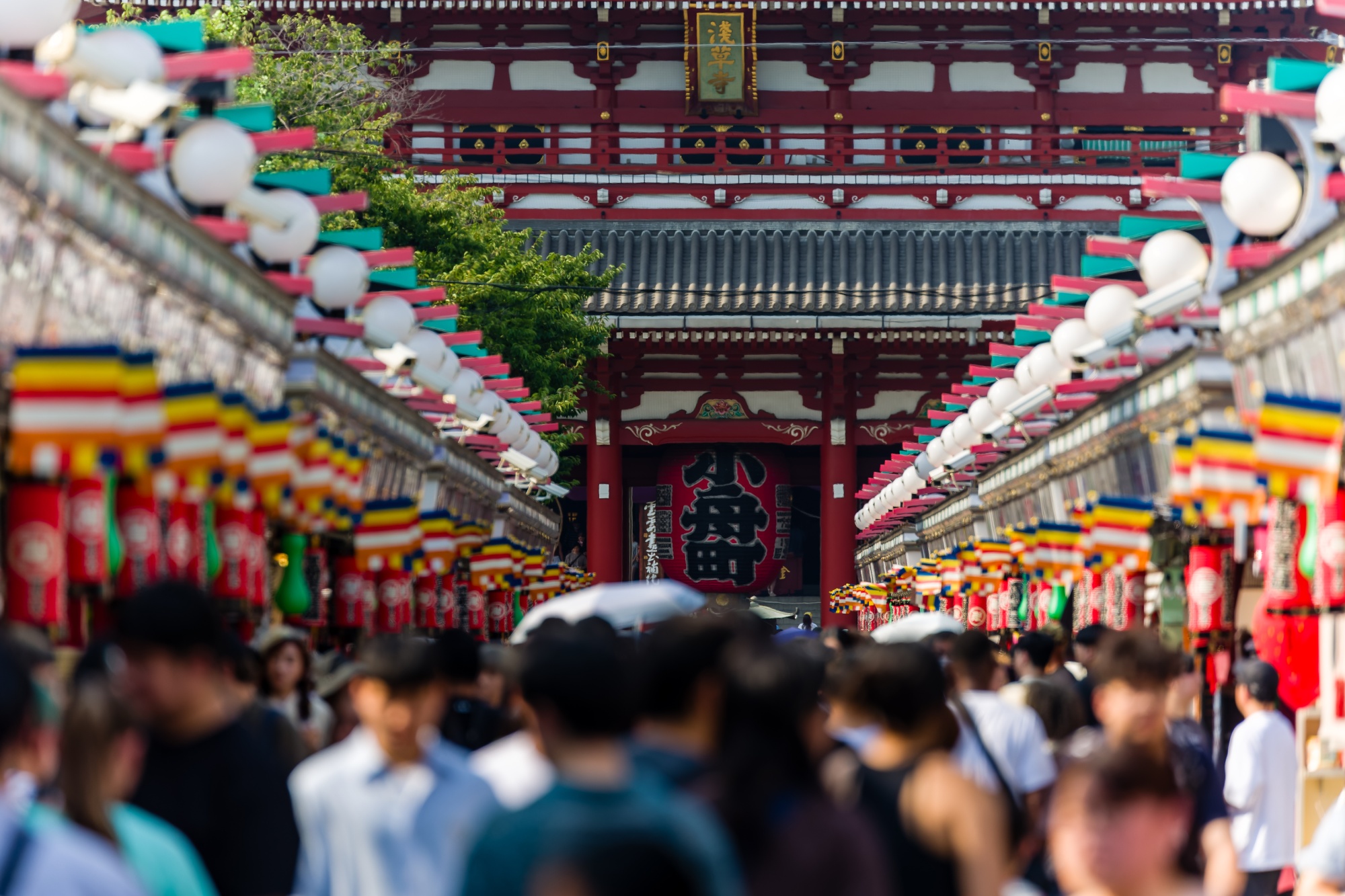
Although there has been a decline of Chinese tourists in Japan over the past few months, the country continues to thrive on that front.
Japan’s tourism industry has quietly passed one of its biggest geopolitical stress tests since the COVID-19 pandemic. Despite losing more than half of its international visitors from mainland China during the first half of 2026, the country continued to notch record numbers for foreign visitors and tourism spending.
Initially feared to reverse Japan’s tourism boom, the reduction in Chinese arrivals has instead unlocked an important structural shift: inbound tourism is becoming less dependent on a single market.
Tourism surge on track
The first year when inbound tourism in Japan surpassed its pre-COVID numbers was in 2024 when it reached over 36 million annual visitors. By 2025, the country hit a record inflow of 42.7 million visitors. In the first half of this year, it has already welcomed approximately 21.1 million international tourists. While it is 2 per cent lower than the comparable year-ago figure, this marks the second consecutive year wherein first-half arrivals have exceeded 20 million.
Much of the decline is attributed to a drop in Chinese tourist inflows, which fell by 56.4 per cent year-on-year during the first semester as shown in Graph 1. Meanwhile, arrivals from other major partners continued to grow, with visitors from South Korea and Taiwan posting double-digit increases year-on-year.

The downturn in Mainland tourist arrivals accompanied deteriorating Japan-China diplomatic relations following Prime Minister Sanae Takaichi’s comments regarding a possible Taiwan contingency in November 2025. However, Chinese arrivals had already begun weakening several months earlier; Takaichi’s comment was just the coup de grâce.
A shock of this magnitude would probably have generated a nationwide tourism slowdown had this happened a few years earlier. Back then, Chinese visitors were a key cog to Japan’s pre-pandemic tourism success story, accounting for a particularly large share of spending. The current landscape, however, suggests that the tourism market has become much more geographically diversified.
A weak yen and higher-value visitors
Diversification alone does not explain the sector’s resilience: Japan’s tourism sector has also benefited from relatively favourable exchange rates. In 2019, the yen traded at around JPY 110 per US dollar, compared with the 2025 rate of roughly JPY 150 per US dollar. Although domestic prices have risen, the yen’s depreciation was a blessing in disguise as it made visiting Japan comparatively affordable and attractive for foreign travellers.
The impact becomes even clearer when looking at tourist spending. International visitors spent JPY 2.34 trillion (USD 14.4 billion) in Japan during the first quarter of this year and another JPY 2.51 trillion (USD 15.4 billion) the following quarter. Despite the decline in total arrivals, the combined spending for the first half of 2026 is higher than the comparable year-ago period.
Average expenditure also rose to JPY 244,000 (USD 1,501.64) per visitor during the second quarter, up 3.3 per cent from a year earlier. Graph 2 further illustrates the average spending by tourists from select countries, which helps explain the overall better performance of the sector despite a boycott by Chinese travellers. A typical US visitor could spend approximately JPY 350,000 (USD 2,153.99) per trip, a far cry from the JPY 237,000 (USD 1,458.56) average expenditure for a Chinese tourist.

The difference in spending partly reflects exchange rate effects, with the weak yen significantly increasing the purchasing power of visitors from countries with stronger currencies particularly the US. However, longer stays, increased domestic travel, and higher average incomes also contribute to higher tourism revenues for Japan. Consequently, even relatively modest increases in arrivals among American tourists can generate disproportionately large economic benefits.
It is true that the yen remains substantially weaker prior to the pandemic era. However, even if a significant appreciation were to occur, Japan is likely to retain much of the price competitiveness that has supported inbound tourism in recent years.
Managing tourism
The government’s policy response reflects confidence that inbound tourism will remain structurally strong. In its April 2026 Public Finance Fact Sheet, Japan’s Ministry of Finance proposed increasing the international tourist tax from JPY 1,000 (USD 6.15) to JPY 3,000 (USD 18.46) per departing traveller. This is to strengthen measures against overtourism and reduce congestion at airports and secondary transport hubs. Rather than discouraging tourism, the measure signals a shift toward managing visitor foot traffic to prioritise a quality experience as well as secures funding for tourism infrastructure.
However, the recent diplomatic rift has coincided with a broader reassessment of Japan’s economic relationship with China. Tokyo has tightened business manager visa requirements while increasing scrutiny of foreign property transactions, particularly around strategically sensitive land. Although not directed exclusively at Chinese nationals, they disproportionately affect Chinese investors and signal a more selective approach to foreign investment. These measures could reduce demand among Chinese entrepreneurs and investors. Taken together, these developments suggest that Japan is recalibrating aspects of its economic ties with China beyond tourism.
The most important conclusion is not geopolitical but structural. Japan’s tourism sector has become more resilient thanks to the wider range of source markets. Hotels, airlines, railway companies, and leisure operators with diversified customer bases are better positioned to withstand geopolitical disruptions relative to businesses heavily dependent on Chinese tourism.
Of course, future improvements in China-Japan relations should undoubtedly provide additional gains. China remains geographically close, economically important, and capable of sending millions of relatively high-spending visitors to Japan. It just so happens that Japan’s tourism industry is no longer fuelled by China alone.
Japan’s tourism boom is beyond a story of record visitor numbers. Instead, it is increasingly driven by three structural changes: a broader mix of source markets, higher spending per visitor, and a more active government role in managing tourism growth. These trends should make the sector more resilient to geopolitical shocks while creating opportunities in premium hospitality, transport infrastructure, and regional tourism. For long-term investors, Japan’s tourism industry appears to be transitioning from rapid post-pandemic recovery to a more sustainable pace.
This original article has been produced in-house for Lundgreen’s Investor Insights by on-the-ground contributors of the region. The insight provided is informed with accurate data from reliable sources and has gone through various processes to ensure that the information upholds the integrity and values of the Lundgreen’s brand.