

If it’s broke, don’t fix it
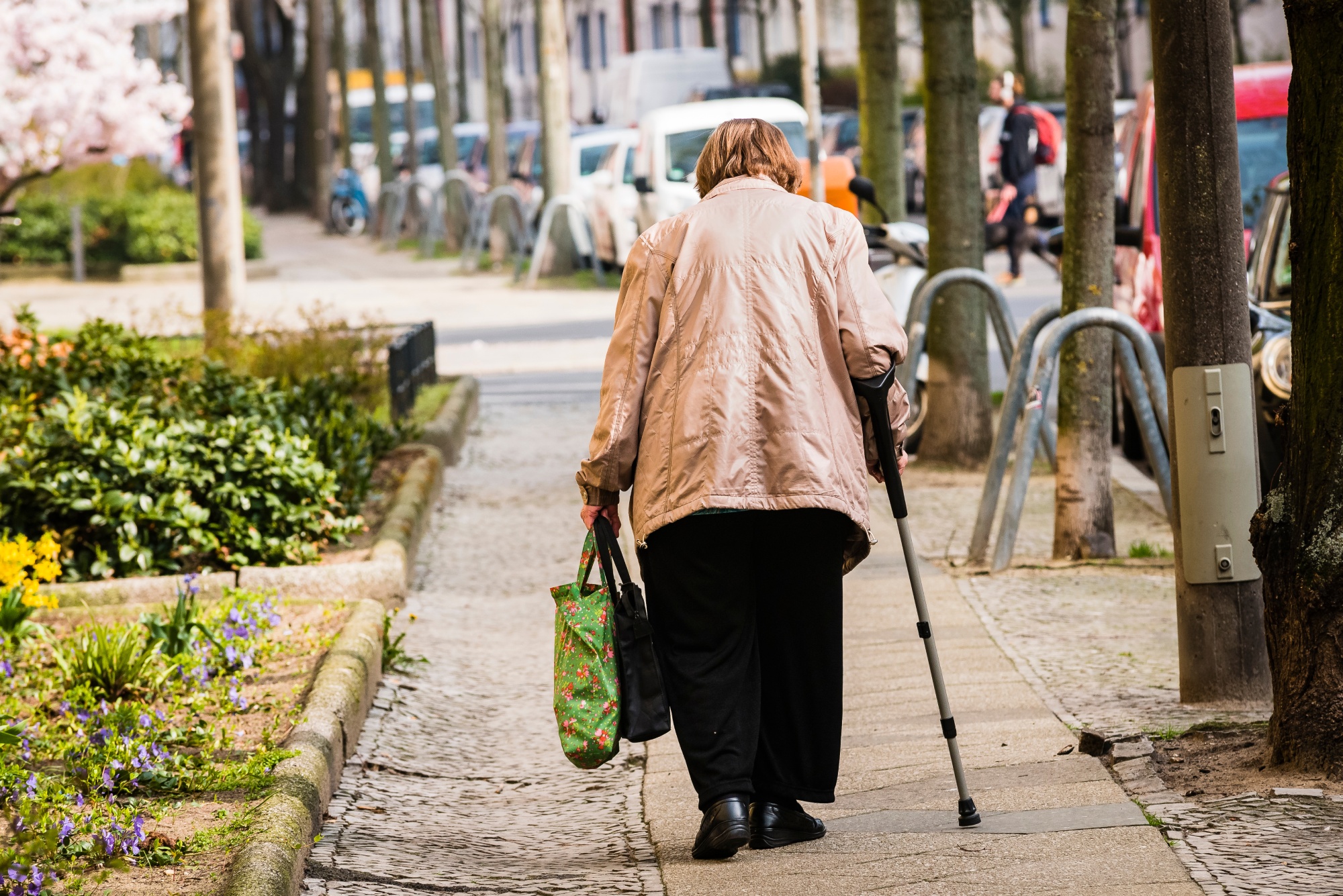
Germany’s pension system needs reform, but it is hindered by competing visions of how to achieve financial sustainability and how to distribute the costs among Germans.
Before Friedrich Merz had even taken office, he broke a central campaign pledge – to leave Germany’s constitutional debt brake untouched. Yet, the federal budget is still short of money. Meanwhile, the government that has promised swift and forceful reforms is bogged down by disagreements over what those reforms should look like. Still, it has launched commissions to examine everything from social services to health, long-term care, and pensions.
Particularly for the latter, demographic change is straining available finances with more ageing dependents. The reform, therefore, must address bearing the cost of financing the pension system. While experts agree on this, it does not seem that way for the German coalition. Instead of rallying behind the idea that everyone has to contribute to the pension system, they appointed a commission to explore the problem deeper, delayed the painful budget cuts, and promised that no one would lose a cent of benefits.
The problem
Social security contributions in Germany amount to 42.3 per cent of gross salaries, paid in equal parts by employers and employees. The total contribution in 1990 amounted to roughly 35 per cent, projected to increase to a 50 per cent share by 2040. Taking the largest share is the pension system at 18.6 per cent. The rest go to insurances for unemployment, accident, health, and nursing care. All operate on a pay-as-you-go basis: today’s workers fund today’s recipients. This works well with a growing population, but strains as the population ages.
Pensions also draw from general taxation, not just from contributions. For instance, one may look at the cover obligations inherited from the former East German system, with the unified government preserving pension benefits after reunification. This amounts to 9 per cent of GDP, with 20 per cent coming from tax contributions, totalling EUR 94 billion (USD 107 billion) in 2025. Although German spending is high, it is not an outlier when compared to other developed countries, as seen in Graph 1.

The real problem is how Germany’s system is paid for and the effect an ageing population has on it. In general, the labour supply, work hours rendered, and productivity level of the economy determine how much revenue the pension system generates. If we look back to 1991, four workers supported each pensioner. However, with more old-age citizens in Germany, the working-age population will shrink by 23 per cent (against the 13 per cent OECD average) over the next 40 years, reducing the support for each pensioner to two workers. This will lead to both higher costs and lower revenue for the pension system.
The economist’s solution
One could increase revenue and decrease expenses. Since labour is the main driver on the revenue side, migration would alleviate some of the pressure in the medium-term. In a previous article, we also touched on the relatively short working hours that Germans prefer, owing to scarce childcare, social norms, and tax disincentives. Productivity growth is also low and can be improved with the right policies. The Left favours widening the contributor base to include the self-employed and civil servants, but this would also only help in the medium-term. Similarly, raising the contribution ceiling for high earners would change little.
One of the biggest levers is the retirement age. Most economists favour linking the retirement age to longevity – raising it by, say, two-thirds of every extra year of life expectancy. That alone would do much to close the gap. Additionally, the government has pledged to keep the starting pension at 48 per cent of the average wage until 2031. However, pension benefits could be indexed to inflation rather than wages, which balances quality-of-life and fiscal strain concerns.
The popular solution
Another popular idea is to tax the rich more heavily and spend the proceeds on pensions, among other things. Since a broad income tax base raises revenue more reliably than steep rates on a tiny number of top earners, proposals now centre on a wealth tax as wealth inequality is relatively high. During the 2025 election campaign, 69 per cent of Germans favoured a tax on wealth and 85 per cent were against raising the retirement age. Die Linke, an opposition left-wing party, proposed a wealth tax on the ultra-rich to raise around EUR 100 billion (USD 114 billion) in additional revenues per year.
Wealth taxes are actively debated among economists. One can make theoretical arguments for such a levy, but implementation is unclear on whether it is better than taxing sources of wealth. The effects also depend heavily on the design and enforceability of the tax, and people would likely respond by saving and investing less. Therefore, taxing property or inheritances may be the safer route since Germany leans less on both revenue sources compared to its peers.
Economists are most wary of funding a pension scheme that supposedly has a clear contributions-to-payouts link but is instead financed by general government revenues – doing so blurs the connection between what workers contribute and the amount they receive during retirement. Germany already faces a EUR 30 billion (USD 34 billion) budget gap in 2027. Why, then, devote higher taxes to pensions rather than growth-enhancing investments? As Graph 2 shows, pensions are already the budget’s single largest item.

In the end, the sustainability of Germany’s pension system is not a question of feasibility but of trade-offs. The answer is for citizens to spread the burden across as many shoulders as possible to lighten the financial load: increase contribution rates, raise the retirement age, increase work hours by improving the tax and transfer system, link pensions to inflation rather than to wage growth, and introduce a capital-backed segment in the pension system – a little bit of everything. The coalition only needs to be brave enough to hurt everyone a little in exchange for a more secure future.