

Does the Indian rupee need saving?
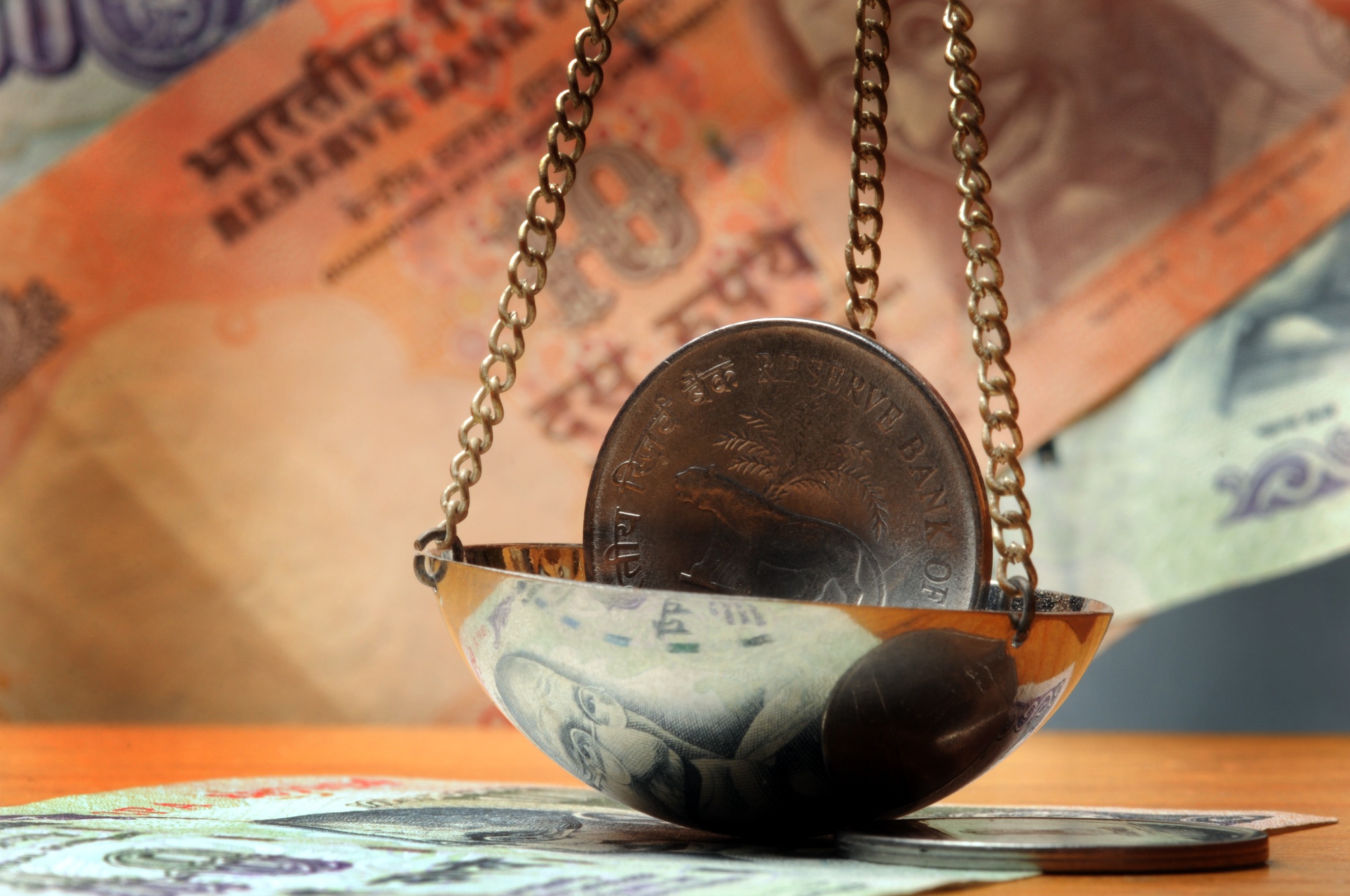
India’s currency has been on a freefall, defying global trends as domestic issues overshadow its strong growth performance.
The Indian economy has proven largely resilient to recent shocks, notching one of the fastest growth rates globally despite major disruptions. It ended financial year 2025-2026 with a 7.7 per cent expansion, faster than the 7.1 per cent pace the previous year even as external trade came under threat. Inflation has remained comfortably within its target band since 2025, while the unemployment rate has fluctuated within a 5-5.5 per cent range.
Despite the strong macroeconomic data, the Indian rupee has been stuck in a slump: the currency has depreciated by 23 per cent between 2020 and 2025 to remain among the world’s worst performers. The steep decline has been sustained in the first half of 2026, with the rupee down by 6 per cent year-to-date. What is keeping the local currency weak, and should this raise alarm among investors?
Down it goes
The Indian rupee has been consistently lagging compared to major currencies in recent years, but the freefall had been most evident beginning in 2025. Graph 1 shows how both the nominal and real effective exchange rate tumbled in the aftermath of hefty tariffs on Indian goods sold in the US. At one point, US President Donald Trump threatened a 50 per cent duty unless New Delhi stops buying Russian oil. Trade negotiations remain underway more than a year since the infamous “Liberation Day” tariffs, with an 18 per cent levy on Indian goods in the interim.

By 2026, the US-Iran conflict and the subsequent oil supply shock spooked financial markets, as elevated volatility led some investors to pull their capital out of India and away from similar developing economies in favour of safe-haven markets. However, Graph 1 also shows that India’s currency experienced a relatively softer depreciation in terms of its real effective exchange rate, suggesting that its exports remain competitively priced for global buyers.
Capital retreat towards old economies including the US also bolstered the dollar – at least, initially –thus, contributing to the rupee’s further weakness. Such effect was partly countered by the Reserve Bank of India’s (RBI) defence of the rupee: the RBI’s foreign currency stash has been declining year-on-year as the central bank had been selling more dollars to prop up the domestic currency. The central bank’s foreign currency asset holdings dropped to USD 542.6 billion in May, 8.2 per cent lower from a year ago based on government data. This decline is likely to continue as the rupee struggles.
Trade, fiscal gaps
The rupee’s downturn has persisted as the spike in world crude prices further padded India’s import bill, given that the country sources over 88 per cent of its oil needs from external sources. This did not help the currency’s cause, as shown in Graph 2. The surge in the value of the country’s oil imports is evident beginning in April, which was met by a near-1 per cent depreciation in the currency. The impact is also felt across non-oil commodities, further weakening the rupee.

Like many Asian economies, India initially provided petrol, cooking gas, and fertiliser subsidies to tide over households and businesses in the initial weeks of the US-Iran conflict when global oil prices surged beyond USD 100 a barrel. By May, the Modi government began winding down the mega-subsidies by allowing state-owned fuel stations to raise pump prices for the first time in four years, along with a reminder for citizens to conserve fuel use. At face value, the increase is minimal at INR 3 (USD 0.03) per litre which can be absorbed by consumers. However, the economic impact is incongruent depending on household incomes, while the potential political fallout is a different discussion altogether.
The reduction of state subsidies is initially painful for domestic consumers, but it is net positive as far as public finances are concerned: this will help India keep its debt burden in check, which already reached 84 per cent of GDP as of end-2025.
Another major drag has been incessant capital flight. Net foreign direct investments (FDI) have consistently posted outflows yearly, further softening the demand for the local currency. Beyond boosting the rupee, it would serve India well to address the bottlenecks that dilute the country’s allure as an investment destination. The country’s push to become Asia’s artificial intelligence hub is a good step, but it has a lot of catching up to do to attract FDIs in the high technology and semiconductor space relative to early adopters like the US and China.
Long-standing concerns on corruption, with India ranking 91st of 182 countries in the 2025 Corruption Perceptions Index, also stand as an FDI deterrent. Its Asian peers Singapore, China, and Vietnam performed better in the same index, which is likely among the reasons that India is trailing behind.
A weak currency is not innately bad, but for India’s case, it is a symptom of underlying problems hounding the economy, and it is not alone – countries in developing Asia had all been heavily burdened by the global oil price shock.
Beyond burning through dollar reserves to defend the rupee, we think the Indian government will get more favourable long-term results by providing solutions to improve the ease of doing business in the country. Over time, this would build up the rupee’s value and generate greater domestic activity – the latter a win for the world’s fifth-largest economy. We remain upbeat about India’s investment prospects, but we see there is much room to perk up growth and maximise returns.