
The future of Brazil’s water transport system
As the costs of roads and train transport keep rising, waterway transport may appear as a potential alternative for Brazil. Which sectors can benefit the most, and how can investors hop on?
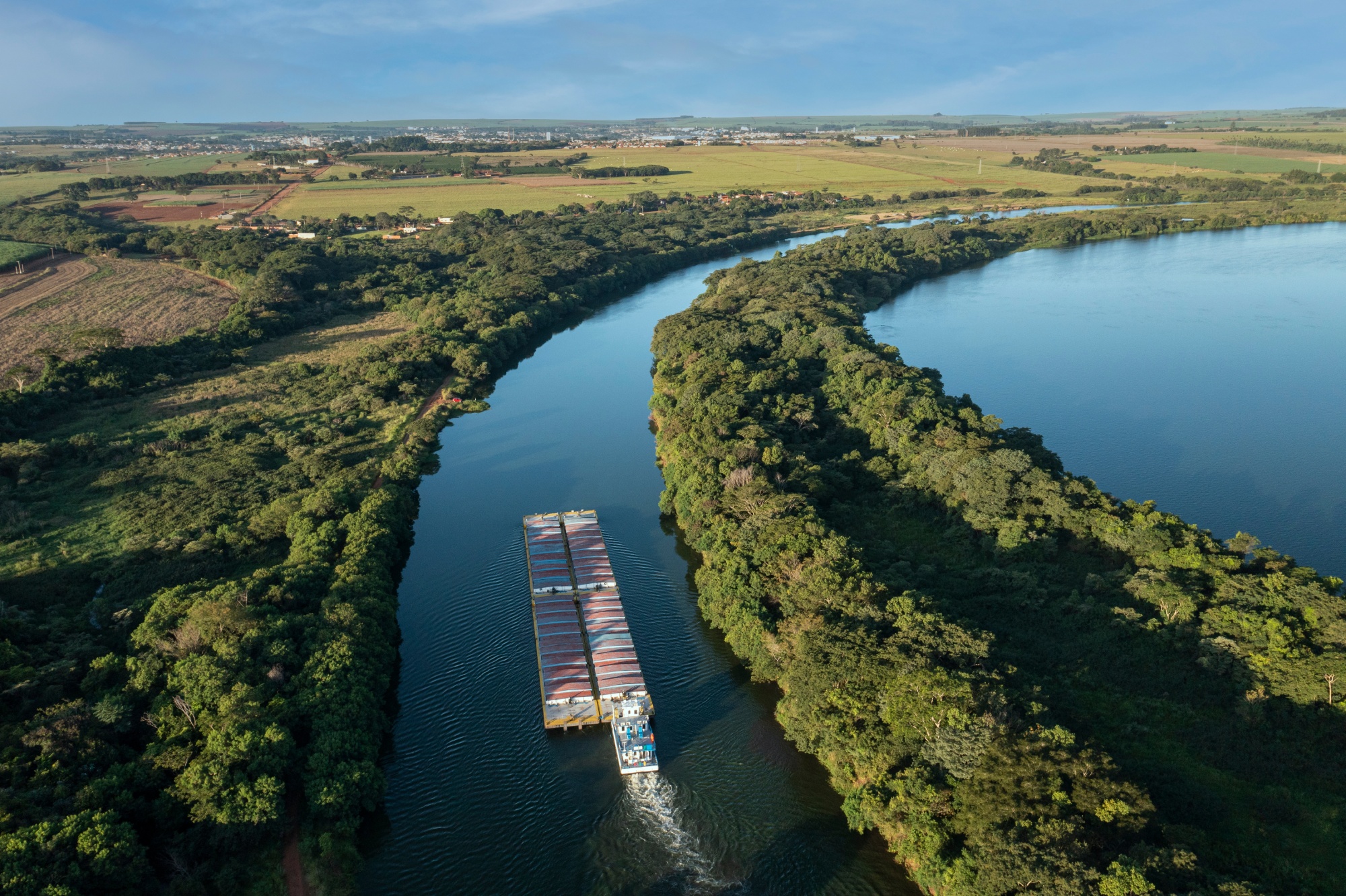
Brazil is home to the largest hydrographic network in the world, containing approximately 12 per cent of the world’s freshwater. Apart from supplying water to riverside populations, rivers and lakes play a strategic role in the movement of cargo and passengers, especially in the north of Brazil. While still underutilised, waterway transportation may pose as Brazil’s answer to a greener and more sustainable transport system. This could also potentially attract gains in the middle- to long-term and can be a good vehicle for risk-tolerant investors.
Channels of potential
Out of approximately 41 kilometres (km) in length, 21 km of Brazil’s waterway network is navigable. This would be a thing of envy for landlocked countries in Europe and Latin America, where hydro transport is not possible. However, Brazil’s network operates below its potential: according to Brazil’s National Waterway Transportation Agency or ANTAQ, only 48 per cent of its economic capacity is utilised.
Currently, Brazil has 10 main waterways, including the Amazon River. To emphasise the usage of these paths, we take the HN-100 Rio Amazonas, for instance, which acts as the main logistics axis of Northern Brazil. This transport corridor carries about 65 per cent of regional transport as it connects more than 70 terminals in the states of Amapá, Amazonas, and Pará. It also carries more than 9.2 million people each year.
Graph 1 further illustrates the total cargo volumes shipped across Brazil via three different channels: inland, coastal, and long-distance shipping.

Long-distance shipping is responsible for transporting more than 1,000 tonnes of products, most of which exported to other countries. This number has grown by 35 per cent over the past decade, with long-distance shipments only amounting to 743 tonnes in 2016. Similar to the expansion in long-distance shipping, coastal shipping saw transport volumes more than double carrying 91.4 tonnes of cargo in 2025, compared to 41.4 tonnes in 2016. While inland shipping only represents 7 per cent of the total cargo transported, it has also likewise grown by 42 per cent in the past 10 years as it ferries both passengers and cargo across waterways. Although the usage of inland and costal shipping has grown rapidly in the last few years, it is at a pace far behind their full potential.
Testing the waters
Brazil’s navigable waterways that cross the country are extensive but are yet to be maximised for commuter travel and cargo transport. The gap is striking: almost 65 per cent of cargo in Brazil is transported by road while only 5 per cent is transported by river. These numbers reflect an old and rigid political plan implemented during the 20th century wherein the Brazilian government sought to bring dealerships into the country to boost the economy. To boost the steel industry, Brazil injected public money to build new highways. However, this historical imbalance between transport channels in Brazil may finally be on a decline. Recognizing that waterways can serve as a reliable mode of transport, ANTAQ released the 2023 General Plan for Waterway Concessions which established guidelines for prioritizing waterway investment projects and granting concession agreements to transport and logistics operators. Consequently, it also fostered the competitiveness of waterways in relation to other large-scale logistics infrastructure, such as highways and railways. Most of the projects under the government plan is slated to take off between 2026 and 2027.
Graph 2 shows the different products transported across Brazilian waterways in 2025, with commodities like iron and raw oil being the main cargo. This is mostly due to these produce originating in regions further from the Brazilian coast, particularly the central western region. Food products are also among the goods transferred through hydrographic channels, such as soy – the country’s biggest agricultural produce – followed by corn and sugar.

Thanks to the natural flow of river currents, water transportation costs can be reduced by up to 60 per cent compared to road transport and by 30 per cent compared to railway. The new waterway plan can greatly benefit the private sector. Already, mining companies such as LHG Mining are investing in increasing iron and manganese ore production, driven by the promise of lower costs of waterway transportation in Brazil. For instance, a Brazil-based industrial company, Hidrovias do Brasil, transported 4 million tonnes of iron ore, grains, and fertilizers in 2023, and this has only increased over the years. It is in these companies that investors should pay attention to; apart from production expansion, it is important to note company efficiency and price reduction for products.
The potential of utilising the more cost-effective waterway transport is particularly attractive at a time when global crude oil prices are soaring. Businesses are likely to take the opportunity where they can reduce freight costs, and Brazil can ride this wave to further investments into the country.