
Chinese consumers need another boost
For years, China has resorted to stimulus programs to revive household spending with little progress. We think a long-term structural change will make things right.
The Chinese economy is battling through a homegrown weakness: consumer spending has remained soft over the past four years, which has been pulling down overall GDP growth.
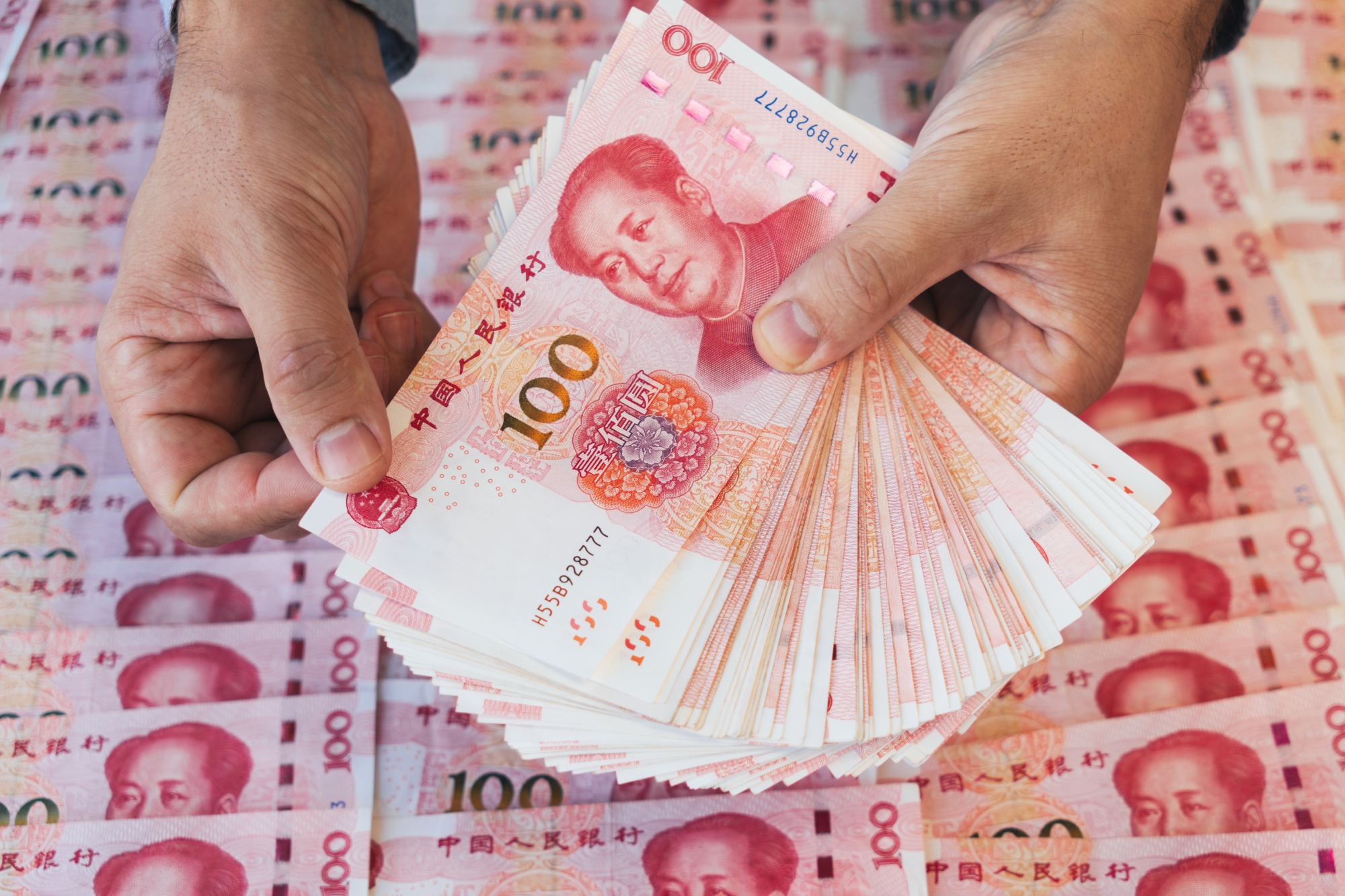
Since March 2024, China has been incentivising household purchases by setting up “old-for-new” programs that invite individuals to trade in old home appliances, gadgets, e-scooters, and vehicles for store credit worth RMB 500 (USD 74) to RMB 24,000 (USD 3,500). These can then be applied as discounts for equipment upgrades and shifts towards electric or new energy vehicles. Interest rates on loans have remained the same for over a year, consumer and producer prices are down, and overall liquidity has been ample, which are ideal conditions to support buoyant private consumption. Yet, the problem persists.
Soft consumer sentiment
Two years and RMB 2.6 trillion (USD 384 billion) in subsidies later, the impact of the trade-in program appears to have bottomed out. The impact of weaker China sales also spills over globally as international brands are unable to generate revenues from what was once their largest consumer market.
Just as the trade-in subsidy programs are entering their final year, total retail sales growth plunged into a contraction in May 2026 and has stayed flattish between July-August, as shown in Graph 1.

The decline matched a similar dip in the consumer confidence index readings for China, which is not surprising. Pessimists have consistently outweighed optimists over the past four years, with China’s consumer confidence index remaining well below the neutral level of 100 to touch the lowest readings in history.
Consumption plays a huge role in driving the Chinese economy forward – after all, it accounts for 56 per cent of national output. When consumer confidence had been at its peak at 103-104 points in 2019, China’s GDP had been growing at rates of above 6 per cent. The unrelenting weak sentiment suggests that growth will likely remain tepid in the succeeding quarters unless decisive reforms are implemented – provided that Chinese households will follow through.
One might say that the sustained slide in consumer confidence observed since February may be attributed to the global oil supply crisis due to the US-Iran conflict. However, it is worth noting that any recovery in the past two years has been slow and fragile, with confidence index readings sticky at the 94-95 level, hovering below the neutral point. Further, mainland China is relatively in a better position to weather the oil price shock compared to its peers given its vast amount of fuel reserves onshore.
Help wanted, funds needed
As things stand, the oil supply disruptions are not as big of a deal for China: the larger drag remains to be weak consumer activity. It would be tempting to expect China to roll out another wide-reaching stimulus program in a fresh attempt to get out of this slump as it had been effective in recent years. However, the Middle Kingdom is not in the best shape financially to afford it.
Data from the International Monetary Fund (IMF) illustrate how China’s public debt burden had ballooned from 50 per cent of GDP in 2016 to 99 per cent of GDP by 2025, which is well above the comfort level for developing nations. More concerning is the speed of debt accumulation, which surged even as the Chinese economy had been recording rapid annual growth. Graph 2 also shows how China’s debt-to-GDP ratio has caught up with the US and the UK, where outstanding government borrowings are now equivalent to the size of their overall economies.

China’s debt burden is likely to swell further. In April, Beijing announced an additional RMB 62.5 billion (USD 9.2 billion) allotment to extend more consumer trade-in subsidies for 2026, to be financed through the issuance of fresh ultra-long-term bonds payable in 20 to 30 years.
Public borrowing is not all bad if the funds raised are spent in quality social benefit programs and research and development, for example. In China’s case, it would be difficult to justify another substantial increase in government debt if it is unable to lift domestic consumption and long-term growth potential. This is why we often say that China is a hybrid economy: it remains an emerging one at face value, but it constantly suffers old-economy problems like bulging debt burden and an ageing population.
The key difference, however, is that the Chinese government still has the agility and the gravitas to implement meaningful reforms compared to its Western peers.
Much of China’s growth momentum will be dictated by their ability to revitalise consumer spending. It is not that Chinese households cannot afford it – in fact, they are among the world’s biggest savers – but it is a matter of convincing them to go out and spend as they used to. We think structural reforms, like a reduction in personal income tax rates or in consumption levies, would serve as a more convincing push for consumers to spend more for longer. Until this happens, China’s domestic spending story will remain in limbo, and this will slowly reduce the attractiveness of Chinese assets in the global scale. However, cheap valuations for companies in high-growth sectors remain a bright spot – these segments will glow even brighter if domestic consumption can bounce back quickly.