

Britain forging nationalisation with steel
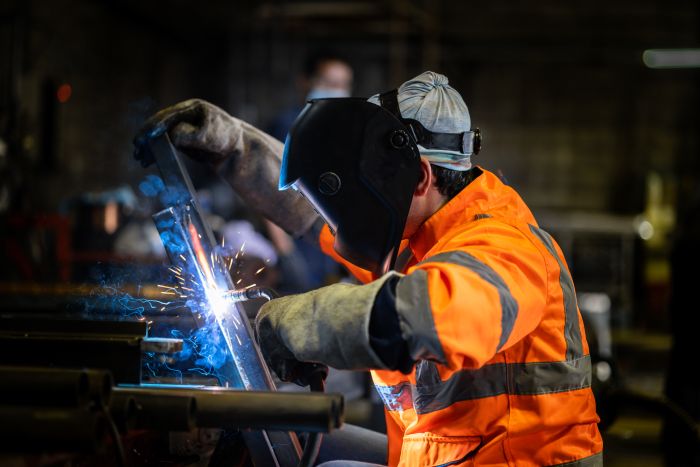
On 12 April 2025, the UK Parliament took the step of nationalising British Steel, the UK’s last remaining producer of “virgin steel” or steel directly produced from iron ores. Following years of low productivity and low demand, output of the steelmaking sector has since plummeted leading to threats of being shut down. This latest incident forced the government to step in and bring the company under public ownership, which has come into force this year.
History
Steelmaking in the UK peaked in the 1970s, producing as much as 28.3 million tonnes of crude steel and 320,000 individuals employed by the sector. However, global oversupply of cheap Chinese steel, a glut in global demand, and punishing US tariffs dampened the output of the UK steel industry. This led to massive declines in both production and employment.
By 2024, around 1,145 registered businesses in the steel industry supported some 37,000 jobs across the country, almost just a tenth of its peak, with sector employment concentrated in the Yorkshire and Humber region, Wales, and in the Northeast. Recent analysis shows that British Steel’s operations directly support GBP 1.1 billion (USD 1.4 billion) worth of economic activities and about 20,200 jobs indirectly.
Graph 1 illustrates the steady decline in the UK’s annual crude steel production, which settled at 2.6 million tonnes in 2025 or just one-third of the volume produced six years prior. This led to the UK dropping in global rankings for crude steel production from 25th to 41st over the same period. China, the world’s biggest source of crude steel, yielded 960.8 million tonnes in 2025.

Jingye, the private Chinese firm that owned British Steel prior to nationalisation, deemed that retaining old furnaces for its operations was simply unsustainable as these incur daily losses of up to GBP 700,000 (USD 913,500). Despite rising operating costs and the relatively low productivity of the sector, the UK government pursued its takeover of British Steel as it viewed steelmaking as a “vital national capability” and that shutting down domestic production would leave the UK at the mercy of global supply fluctuations.
Are water and electricity next?
This is not the first time that the UK turned to nationalisation in its attempt to safeguard public well-being. In fact, the government had already set various industries down this path over the last six years.
Since 2024, the Labour government led by then-Prime Minister Keir Starmer has been in the process of taking train companies into the public fold. Southwestern Railways, Greater Anglia, Govia Thameslink Railway, Chiltern Railways, and West Midland Trains have already been nationalised in 2025 under the Great British Railway company, a state-owned firm that will operate rail service lines upon expiration of their respective service contracts. The rail system was state-run after World War II but has been privatised in the 1990s following the long wave of efficiency efforts championed by prominent Conservative leader Margaret Thatcher. Rail infrastructure, however, has always remained under public control.
Meanwhile, Thames Water, the largest water and wastewater services company in the UK servicing the greater London area and nearby regions, is also a candidate for nationalisation. Thames Water incurred a massive debt liability estimated at USD 25 billion as of end-June 2026 and posted close to USD 2 billion in post-tax losses in the fiscal year ending March 2025. These figures have led Prime Minister Andy Burnham to consider several rescue options, which include a government bailout, placing the company into a temporary special administration regime, or full nationalisation.
There is also significant clamour for the nationalisation of the electricity generation sector, one that the Labour party has long included in its policies but failed to implement. The call stems from the high energy bills paid by British households and businesses compared to their foreign peers. Graph 2 shows the nominal electricity prices in different countries, with the UK recording one of the highest per kilowatt-hour power costs as of December 2025. With the new wave of enthusiasm from the Labour party and the recent memory of the 2022 energy crisis, Burnham is likely to face louder calls for energy companies to be taken into public control just to reel in electricity rates.

Economic theory suggests that public ownership, in varying levels of regulatory oversight or outright control, is an extreme measure reserved for firms and industries that are natural monopolies or are on the brink of failure. However, there seems to be newfound confidence within the UK government to take over the operations of companies servicing public utilities. It appears that such efforts are being pursued to address the high cost of living in the UK as well as to protect local jobs, such as in the case of British Steel – and not necessarily because the state has proven to be more efficient than private operators.
While the idea of nationalising industries and exercising more direct control of the economy may be made with the best of intentions, it comes with great risk not just to the government but also to British taxpayers as well. What is certain is that these risks will end up being shouldered by taxpayers. For example, the Treasury estimates the cost of placing Thames Water under state control at USD 5.3 billion over the course of 18 months. This does not consider the billions of outstanding debts of Thames Water. Even the British Steel nationalisation is expected to cost some USD 1.7 million per day to keep furnaces running in Scunthorpe.
With the UK government running on a budget deficit in the last decade, the question now is whether nationalising legacy industries is the best way of using limited public funds. This confidence in nationalisation plans should translate to cheaper and more efficient services, but if fiscal balance is any indication, the British government is likely to be found wanting.