
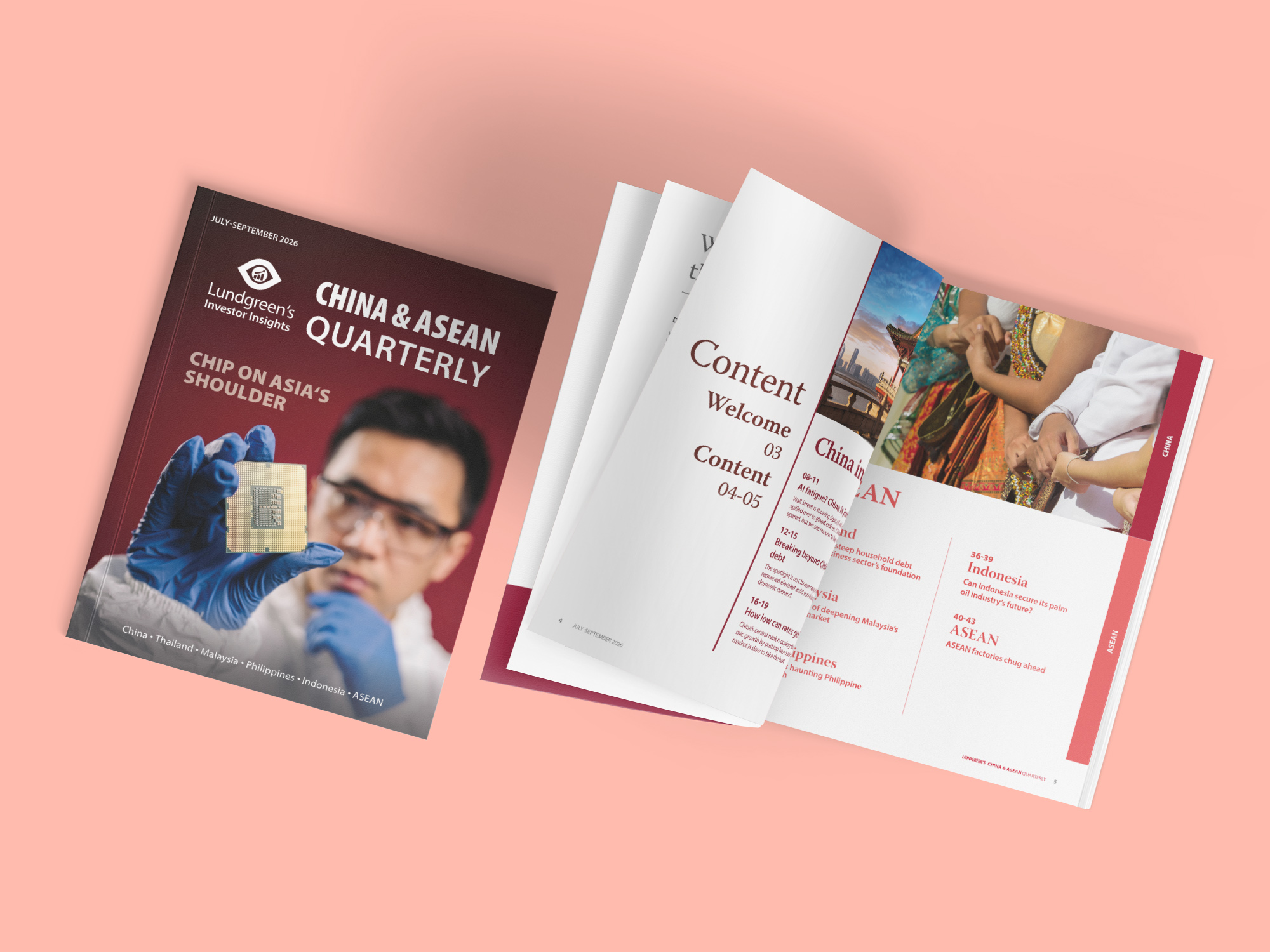
China and ASEAN Quarterly Q3 2026
We offer our belated greetings for a Happy Mid-Autumn Festival, a celebration for bountiful harvests in Chinese culture.
Developing Asian economies have gone through a challenging period as the global oil supply shock persisted in the third quarter, though we have seen a rapid rebound in regional manufacturing activity despite this setback. The higher prices of oil and other basic goods were a chip on the shoulder for Asian consumers, but we see that they have managed to navigate their way around this constraint quite well.
Further, countries like Thailand and the Philippines are grappling with the effects of idiosyncratic risks that complicate their growth story: Thai households have slowed down on consumption amid elevated household debt, while Philippine GDP growth has been restrained by a contraction in construction activity and new investments over the past year.
Despite these, our outlook for Southeast Asia and China is not all gloomy. In the articles that follow, we look at how some countries are faring well, such as China, which has capitalised on robust oil reserves as well as on strong semiconductor manufacturing to revitalise onshore IPOs and stock market activity. Malaysia is pursuing a similar path, with a national plan seeking to deepen domestic capital markets to propel local chipmakers deeper in the global supply chain. These “chips” are, in fact, helping China and Southeast Asian markets move past the oil-induced slump. This is among the many reasons why we remain bullish about prospects in this part of the world.
We hope this magazine will provide a good perspective into the Chinese and Southeast Asian economies which would be helpful in making your investment decisions. As always, we invite any feedback that you may have.
All the best,
Melissa Luz Lopez
Chief Economist for Southeast Asia and China