
Riding on Malaysia’s auto sector
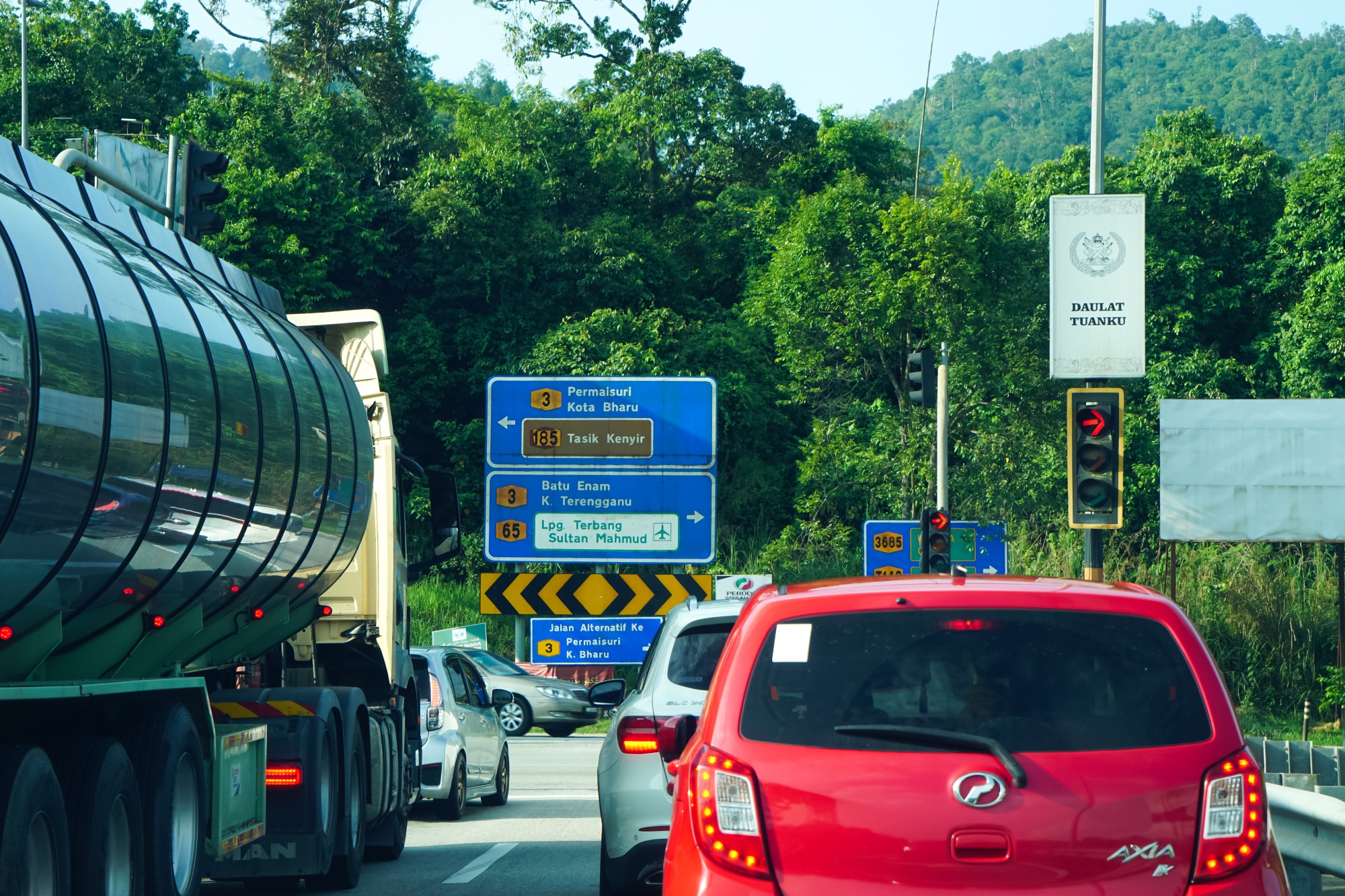
In 2025, Malaysia overtook Indonesia in Southeast Asia’s automotive market. The question is if the country can deepen the domestic supply chain to attract foreign investors.
The energy crisis that started in early March 2026 has exposed the economic cost of Malaysia’s reliance on petrol.
In a previous article, the government had already reduced the quota of fuel subsidy from 300 litres to 200 litres. Recently, however, the government restored the quota starting 1 September to allow more vehicle owners to avail of the subsidy. This also reflects that while finances may seem tight, consumers consider vehicles to be a necessity especially for those in the logistics as well as digital ride-hailing and delivery service businesses. In addition, the New Industrial Master Plan 2030 (NIMP 2030) for the automotive industry hopes to maintain affordable petrol prices for units reliant on fuel while attracting investment towards emerging electric vehicles (EVs).
It seems that Malaysia is finding its space within the evolving global auto market, but the question is if it can build a deeper manufacturing and technological ecosystem that could attract more investments.
Demand for local units
According to a July 2026 report from the Malaysian Automotive Association, the local industry’s sales volume increased by 5 per cent for a total of 73,615 units sold thanks to the rise in monthly production and sales, especially for national models. Further, the first seven months of 2026 saw 458,968 units sold, an increase from 443,777 units from the same period last year. Global oil shock aside, the data shows a persisting demand for automotives in Malaysia.
Further, Graph 1 shows that Malaysian car brands Perodua and Proton have been dominating the industry against foreign brands with a combined total of 305,165 units sold. This strong show of support for homegrown manufacturers could be attributed to affordability and scale that can meet consumer demand.

According to a 2024 survey by Malaysia’s Department of Statistics, nearly 92.3 per cent of households own a car. Further, some 11 per cent of aggregate household spending goes into transportation costs, equivalent to an average of MYR 611 (USD 151.68) per month. Hence, it is no wonder that Malaysia was able to topple Indonesia as the top seller of vehicles in Southeast Asia, with 820,752 units sold last year against Indonesia’s sales that totalled 803,687 units.
Malaysian carmakers are currently enjoying high demand, though looking at sales alone is not enough to paint the full picture. The interesting point is the bargaining chips held by Malaysia’s industry players that could potentially drive foreign manufacturers to enter the local scene.
Seeking investments
Malaysia’s National Automotive Plan 2020 seeks to position the nation as a regional leader in vehicle manufacturing, engineering, and technology while fostering the ecosystem for next-generation vehicles. One example is the signed agreement between Proton’s majority shareholder DRB Hicom and Chinese car maker Zhejiang Geely worth USD 10 billion in 2023 to develop a manufacturing hub in western Malaysia. The collaboration has so far contributed around MYR 806 million (USD 200.09 million) towards government revenue.
Looking at Graph 2, there has been a boom in investments, especially foreign capital, into Malaysia’s automotive industry after 2021. One would remember the global shortage of microchips at the time, which changed Malaysia’s investment landscape and led to cross-industry deals for electrical and electronic equipment purchases. With the growing demand for EV production, Malaysia saw foreign investments into the sector peak in 2024. For instance, Chinese battery manufacturer EVE Energy sought to expand its reach which led to its MYR 6.8 billion (USD 1.69 billion) investment into an energy production site in Malaysia.

Although total investment slid from MYR 13.9 billion (USD 3.45 billion) in 2024 to MYR 13 billion (USD 3.23 billion) by 2025, it remains dominant compared to other industries. Thus, the true indicator of success is not the accumulation of foreign investments but the evolving domestic capability to improve technologies to make quality cars.
Despite potential opportunities for Malaysia’s EV makers among ASEAN buyers, protectionist moves such as the updated policy requiring a minimum cost, power output, insurance, and freight value of MYR 200,000 (USD 49,649.98) for imported completely built-up EVs may discourage other foreign competitors from entering the local market. To dispel some of the criticism, the Ministry of Investment, Trade and Industry assured Malaysia’s EV market was robust with 34 foreign brands present in the country in 2025, 14 of which came from China.
Still, the local sector leaves a sweet spot for foreign companies as Malaysia has the resources and ecosystem for the market to thrive. Further, the country has 592 specialised automotive vendors, along with skilled labour to support new EV manufacturers.
Finally, we see opportunity for battery manufacturers as Malaysia has started making its homegrown EV battery with an investment of MYR 20 million (USD 4.96 million). At the same time, the country is looking to Indonesia for a partnership on nickel supply, a key component in these batteries, since the latter sits on the largest nickel reserves globally. If successful, there is potential that the battery manufacturing segment in Malaysia will also move up the value chain globally.
This original article has been produced in-house for Lundgreen’s Investor Insights by on-the-ground contributors of the region. The insight provided is informed with accurate data from reliable sources and has gone through various processes to ensure that the information upholds the integrity and values of the Lundgreen’s brand.