
Thailand’s steep household debt upsets business sector’s foundation
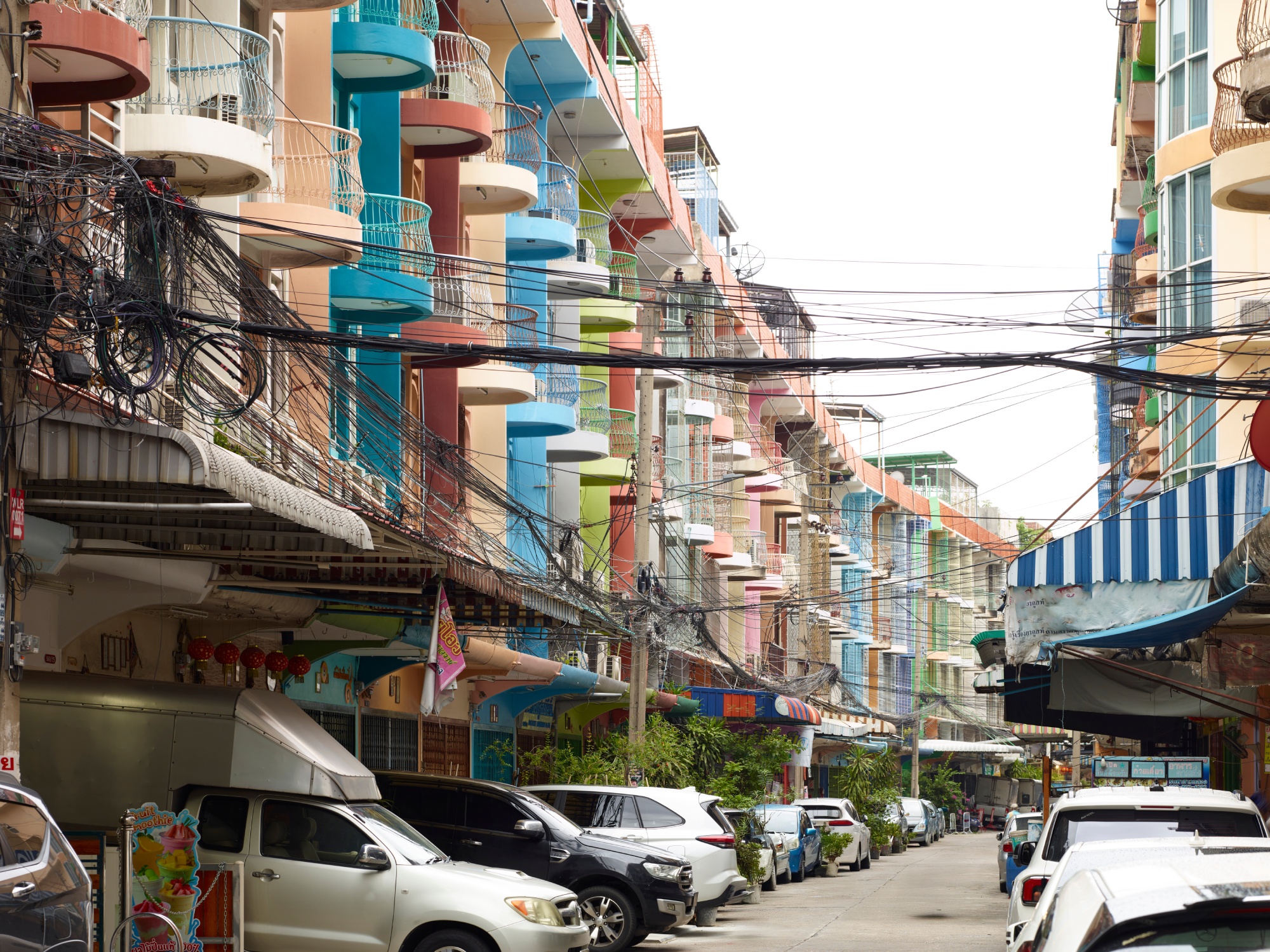
High indebtedness of Thai households is constraining growth in the larger economy, including private businesses.
The aftermath of the 2008 financial crisis pushed global household debt to levels that people have yet to fully recover from. For Thailand, consumer debt began to increase significantly between 2010-2011. Theoretically, high household debt weakens consumer spending given lower disposable incomes, hence the view that it is holding back the growth of the Thai economy.
For instance, Thailand recorded a GDP growth of 1.9 per cent in the second quarter of 2026, easing from 2.8 per cent in the previous quarter. According to the National Economic and Social Development Council’s report, private consumption growth has weakened this year, from the first quarter’s 3.3 per cent to the following quarter’s 1.9 per cent, indicating a decline in purchasing power. This spills over to the business sector, with firms likely to be distressed as softer sales combined with higher operating costs will exert greater pressure on their bottom lines.
Dilemma of debt and spending
The Bank of Thailand (BOT) highlighted that mortgages accounted for 35 per cent of all household debt as of end-March. While mortgages appear prevalent, the property market has remained sluggish by the second half of 2026 due to global market conditions and persistently weak purchasing power. Personal and business loans have also contributed to high household debt in Thailand, with people resorting to credit card and personal loans to keep up with rising costs.
Graph 1 shows Thailand’s efforts to deleverage households from the high debt levels that were accumulated during the COVID-19 pandemic, which peaked at 94.6 per cent in 2021. While this started declining in the second quarter of 2024, it does not automatically indicate the recovery in households’ purchasing power. In fact, the debt ratio remains above the pre-pandemic level at 84.1 per cent – and merely returning to this level is still uncomfortable for the BOT. The goal is to at least shave this to under 80 per cent of GDP, which right now still looks far off.

Further, the Economic Intelligence Centre at Siam Commercial Bank found that household income fell by 2.5 per cent for the first time in six years in 2025. Average household income also fell by 5.4 per cent in the same period, attributed to diminishing purchasing power. The US-Iran conflict pushing commodity prices upwards has only added to the challenges that Thailand has to overcome this year.
Already, prices for nearly half of Thailand’s 464-item inflation basket have risen. While household debt has been on a decline, household earnings have also been squeezed by inflation, likely shifting consumer behaviour towards more conservative spending. We believe that this will spill over to the business sector, with smaller firms likely to feel more pressured as consumers spend less.
Be squeezed or survive?
The current energy crisis further amplifies the weakness in the Thai business sector, with tough times making consumers even more price-sensitive towards non-essential purchases.
In Graph 2, we can see the deterioration of Thailand’s business sentiment index since March, with the US-Iran conflict sending businesses into a contraction phase. Some recovery is seen for August with the current period reading almost touching the neutral threshold of 50 points, however, the re-escalation of attacks in September might reverse recent optimism.

Business operations have become even more challenging: the Ministry of Commerce’s Department of Business Development recorded 7,024 businesses have closed shop in the first half of the year, amounting to a total capital loss of THB 98.9 billion (USD 3 billion).
One of the business sentiment indicators shows investment activity in expansionary mode for both the current and expected periods. According to Deputy Prime Minister Ekniti Nitithanprapas, investments in Thailand have expanded to 14 per cent year-on-year in the three months leading to 30 June, with the total value of proposed projects reaching THB 1.47 trillion (USD 45 billion).
The significant narrative is that Thai businesses are not fading away – in fact, they are far from it. According to government data, a total of 44,773 new businesses have sprouted during the first half of 2026, reflecting regained confidence of investors. It also shows that household debt and demand do not inherently diminish the attractiveness of Thailand as an investment destination.

Stimulus for stability
Thailand’s authorities must work on stabilising market confidence to avoid becoming a stagnant economy. One initiative is the co-payment scheme “Thais Help Thais Plus: 60/40“, which seeks to stimulate the local economy by providing cash subsidies amid higher living costs. The scheme applies to a maximum of THB 1,000 (USD 29.90) worth of food, drinks, general items, and transport services purchased from local stores, with beneficiaries only paying 40 per cent of the sticker price and the balance covered by government aid. The package has been extended until 30 November, with availments reaching THB 163.6 billion (USD 4.9 billion) as of 20 September. Though this does not directly reduce household debt, it encourages household spending without having to take on additional borrowing.
Further, low interest rates set by the Thai central bank also supports consumption recovery, with the key rate maintained at 1 per cent despite faster inflation.
For foreign investors, doing business in Thailand may open new opportunities especially that the country is gaining momentum within the high-technology and artificial intelligence global supply chains. The Asian Development Bank cited Thailand’s emerging role in the international AI cycle, with a spike in US-bound exports boosting growth prospects this year.
Direct household subsidies are providing the much-desired growth boost for the Thai economy, but we look forward to long-term reforms to significantly reduce household debt and improve affordability for consumers.