
Welcoming the Eurozone to the global middle class
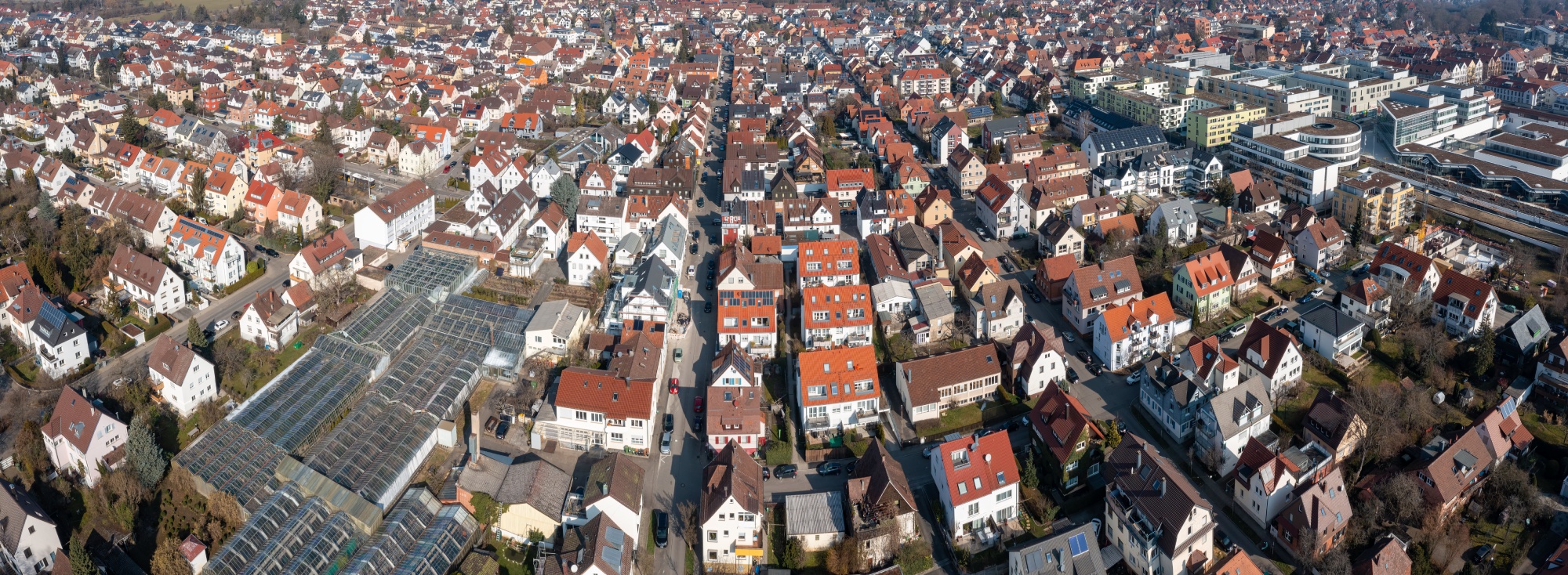
The global middle class is growing every day. Though the trend will intensify, some households will continue to win while others will feel even more pressure.
An entry-level employee starting in a call centre in Manila could earn PHP 20,500 (USD 333.74) per month. Adding the 13th month salary, that could amount to PHP 22,000 (USD 358.16) per month. This government-mandated pay is non-taxable for up to PHP 250,000 (USD 4079.98) in the Philippines which also includes a tax rebate. Comparing the same scenario in Germany, an employee with less than three years of experience could earn a monthly remuneration of around EUR 1,600 (USD 1,875) after tax and social contributions.
The considerable difference between these two data points captures a big part of the working population for middle class income jobs globally. Germany is the biggest European economy, and not many years ago, the country represented an unbelievable economic power. Meanwhile, there is the Philippines, which represents an economy with relatively low salary levels despite its strong growth even when compared to other emerging markets. In our view, these two economies illustrate very clearly how fast the global middle class is emerging – and we argue that this is incredibly important for investors to include in their strategic thinking.
Diminishing gap
The well-known Big Mac Index from The Economist shows how much the iconic burger costs in selected countries, serving as a gauge of local purchasing power. It is also an indication of the strength between currencies, and potentially, if a currency is over- or undervalued.
When we look at the gross and net salary for a newcomer in a call centre, we focus on the person’s income and related information like taxation. Similar to the Big Mac as a standardised global proxy for consumption, a call centre job is a good proxy for a global comparison of jobs and income levels. We are fully aware of the big differences in the cost of living and the various income levels across the Philippines. Germany also represents pretty big variations, but the benchmark points we are using in this article is key here.
To compare the disposable salaries in the Philippines and Germany, the first step requires correcting for purchasing power. The estimates we are using is the cost of living in the Philippines, which is 60 per cent lower than Germany’s: even if we adjust the Philippines’ monthly income up from USD 365 to USD 915, this is still somewhat lower than a German’s monthly income of USD 1,875. Our focus here is that it now has become possible to show realistic calculations about when these two economies will converge. As this trend continues, absolute salary levels will also level out. A key driver behind the convergence is a difference in GDP and salary growth, as well as inflation and exchange rate adjustments.
The Organisation for Economic Co-operation and Development (OECD) recently released a report on tax wedges, with an interesting observation on how governments in the old economies are forcing average income taxes to move higher. Graph 1 is an example showing an increasing tax burden for OECD households during the past five years. As it is all about disposable income, then tax increases in the old economies is also a way to fast-track the convergence of the global middle class.

Adjusting to the megatrend
So, what do these factors mean for investors? First, we argue that its effect will be long-term – a truly very big megatrend that has been ongoing for decades and will continue. The change happens every day, and now, the gap in personal incomes globally is narrowing at a pace that makes it noticeable. Further, our main scenario is that the trend of global middle-class incomes adjusting closer to each other is gaining momentum.
Middle-class consumers around the world are already consuming the same products, to some extent. This will intensify, and in around 10 years’ time, even middle-class households in the Philippines and Germany will increasingly purchase the same products. The commercial winners will be the companies that can quickly adapt. It does not have to be the biggest companies today, though global players have an advantage. As mentioned, navigating this landscape is essential for companies and their investors. For instance, the airline company Ryanair understands its clients’ basic purchasing power, including when and how to upsell even if it is just for USD 1.
Does it mean that everyone reaching middle-class income level will suddenly be swallowed into a big swamp? Not necessarily, but this “middle-income trap” is already a known phenomenon and we expect it to be even more outspoken. China is a brilliant example of how the middle class trap has started to work like an invisible force. During the first 30 years after China opened up its economy, hundreds of millions of people moved upwards from economic poverty to the lower-middle-income class and further onto the middle class, substantially changing living standards. However, the suddenness is seen where one would buy a new car after using the old one for three years, but the new car’s size would remain the same.

The economic truth is that pushing a whole country’s middle class to an even higher income level requires enormous GDP growth. At the same time, it needs to be significantly faster than the growth in other countries. It is a rare occurrence and is certainly not the outlook for many countries over the next decade. For many households in the emerging global middle class, it will be an economic victory to move further upwards if we measure according to personal disposable income. When considering who will win this race, Graph 2 gives a good indication. If there is more economic flexibility for households through lower income taxation, the better they can keep the upward momentum. Another solution that we consistently point at is to emulate our current favourite Eurozone country, Greece, where the weekly work hours now is 44 hours. It is a sure winner when it comes to securing a good standard of living for the Greek middle class in the global race – and it will attract long-term investors.