

Trump synonymous to value destruction
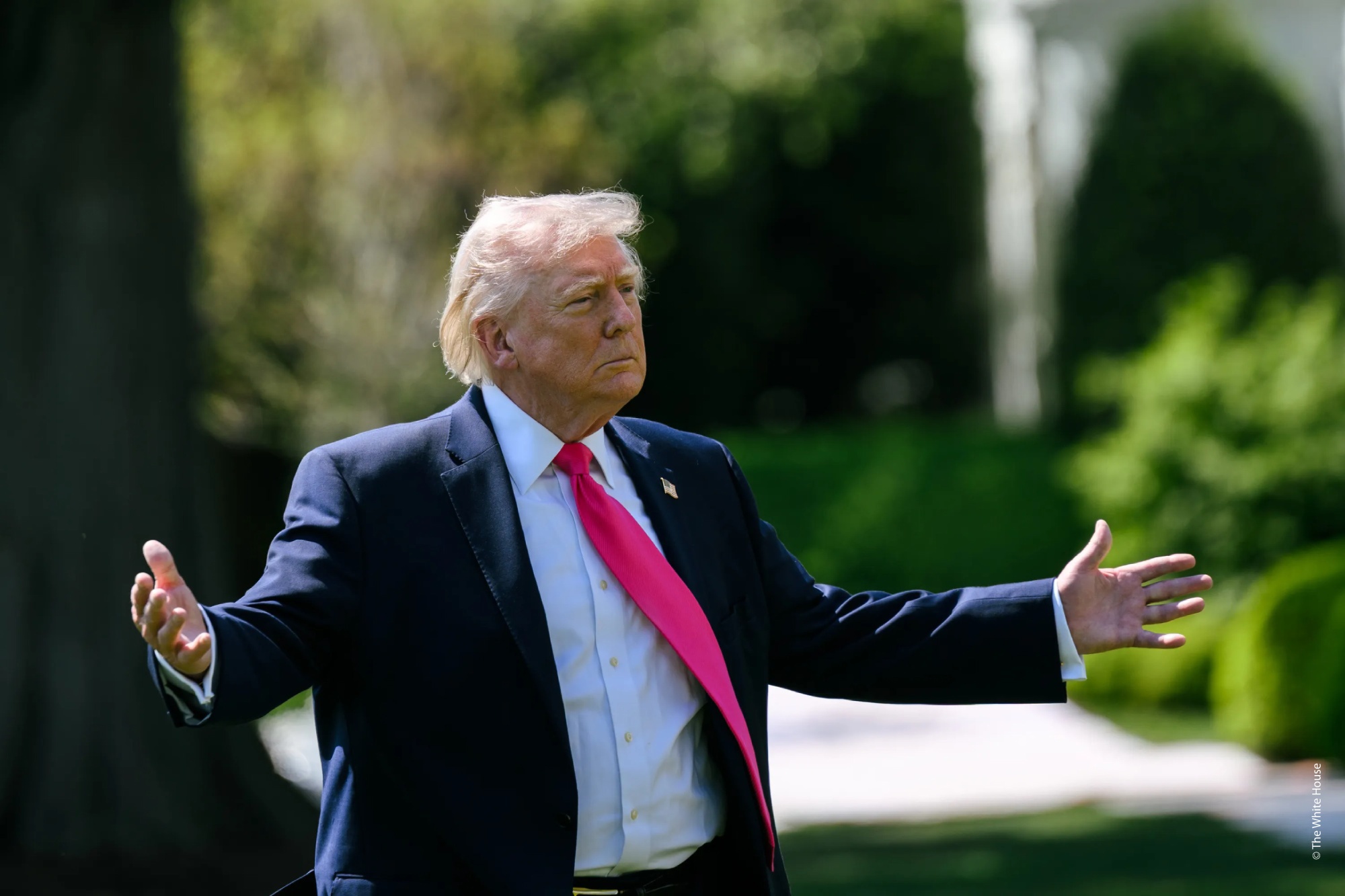
US policies under Donald Trump have rattled global markets over the past year, but the greatest pain has been dealt at home.
Global investment flows are increasingly losing appetite for US assets in favour of alternative destinations, which we see as a direct reaction to regressive policies concerning international trade and diplomacy.
Hefty import tariffs set by President Donald Trump one year ago – dubbed as the infamous “Liberation Day” duties – have shown how other economies can thrive with new trading partners, as well as just how heavily reliant US industries are on foreign supplies. The US-Israel joint attacks on Iran have raised inflation expectations worldwide as crude oil from the Middle East had been unable to pass the Strait of Hormuz amid Tehran’s retaliation.
While the rest of the world has been forced to pay the cost of Trump’s volatility-inducing policies, one could ask: what happens now to US assets?
Losing relevance
Major equity indices are slowly but definitively winding down their weighting of US stocks in their managed funds, and it is easy to see why. American companies have lost their appeal given the extremely volatile business environment in the US, alongside stronger growth prospects elsewhere. Graph 1 shows how the FTSE All-World Index, an index fund managed by the London-based FTSE Russell, has scaled down its exposure to large- and mid-cap US stocks over the past year. From a 65 per cent share in end-2024, US equities are down to a 61 per cent weight in the global index as of March 2026, a clear indication of dwindling interest on these assets.

Large listed firms in Japan and the UK have benefited from the portfolio rebalancing. Even Wall Street fund managers have been raising their exposures to Japanese companies, with Warren Buffett’s Berkshire Hathaway serving as the perfect example. This mirrors our decision to downgrade our risk weighting for US assets from overweight to neutral in April 2025, as we see investing in other high-growth economies as being more profitable for our investors.
The decision to dial down placements in US stocks followed a relatively strong performance of domestic stock market indices in 2025 compared to previous years, largely fuelled by excitement over generative artificial intelligence (AI) systems. Yet, as Graph 2 shows, US stocks had underperformed relative to global peers across three major benchmark indices maintained by FTSE, MSCI, and S&P. Further, global equity indices that exclude US stocks surged by 28-32 per cent year-on-year, far outpacing the performance of US-focused indices. The same trend has been sustained for January-March 2026: world benchmarks that exclude US equity posted the narrowest declines, while US-only indices suffered the biggest losses and were down by almost 5 per cent.

Apparently, flip-flopping tariff rates as well as verbal attacks targeting private business, the Federal Reserve, and global leaders scare investors away, especially when such actions constrain economic growth and value creation onshore. This is the very reason that we call Trump a value destructor, not only for US assets but for the rest of the world.
With the Supreme Court rejecting Trump’s use of emergency powers to impose sky-high import tariffs, all of these disruptions appear all for naught – and, if anything, the US has been rendered worse off.
This is why we see the pattern of investment managers decoupling away from the US being sustained for the rest of 2026, which works in favour of emerging markets like Southeast Asia and China. At Lundgreen’s, we also see great opportunities in privately-held European firms, specifically those in high-growth segments like technology and defence.
Big, but not beautiful
Apart from the AI hype, a rare strong facet of the US economy over the past year had been the passage of The One Big Beautiful Bill (OBBB) Act of 2025 that raises government spending and offers tax cuts to spur greater domestic economic activity. Despite rate reductions on both income and corporate taxes, which will provide bigger disposable incomes for consumers and free up capital for businesses at the cost of eroding public coffers, the law pushes greater federal spending towards defence and border security. This translates into an even larger fiscal deficit for the US, already at USD 1.17 trillion, and would potentially enlarge the country’s debt burden, which is already bigger than national output at 122.6 per cent of GDP as of end-2025.
Executive directors at the International Monetary Fund (IMF) gave the US a scolding regarding fiscal imbalances and have recommended federal authorities to get started in shoring up more revenues and/or improving efficiency in public expenditure and social aid programs – essentially the opposite of what the OBBB seeks to do. The IMF also reminded the Trump administration of the US’ role in the global climate agenda, given that the US is among the biggest sources of carbon emissions globally, following the reversal of green policies and initiatives under his presidency.
With these many uncertainties in sight, it is not surprising to see global investors pivot towards assets in economies with a more stable and predictable rule of law, and with strong domestic growth drivers that would likely translate into solid investment returns rather than gamble on US financial instruments which will most probably take a direct hit from Trump’s turbulence. We continue to recommend keeping a neutral stance towards US equities and favour investing in high-growth sectors and markets like China, developing Southeast Asia, as well as private markets in Europe, which we see as more profitable bets at the moment.