
Thailand’s search for political and economic stability
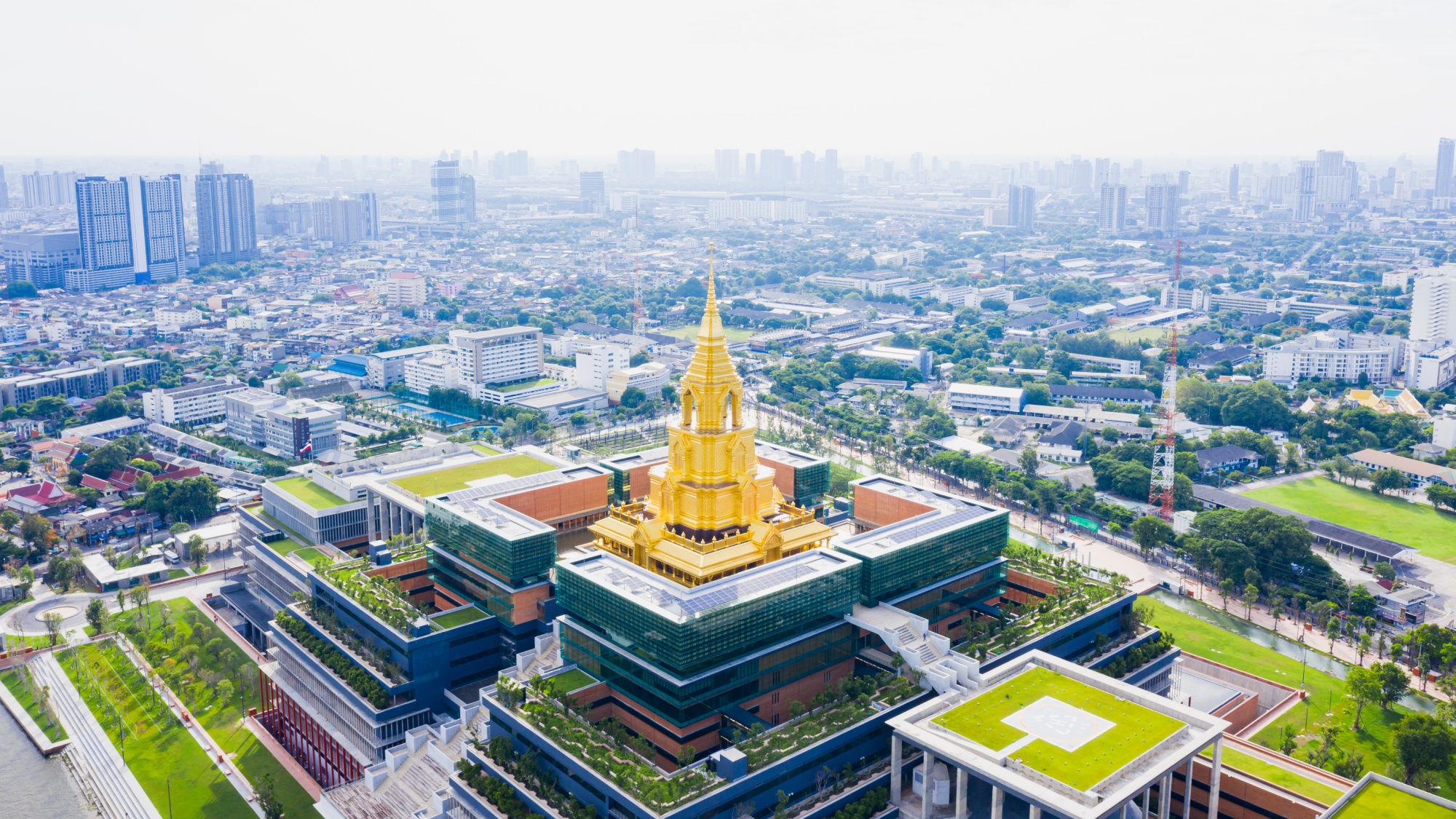
Thailand’s February election concluded with the landslide victory of Bhumjaithai party led by Prime Minister Anutin Charnvirakul. It is now up to him to steer the Thai economy towards stability.
For the past three years, Thais have had to endure a prolonged period of political instability on top of a precarious economic situation, earning the country the title of “sick man of Asia”. With three leadership changes during this short period, the Thai government dissolved the parliament on 12 December 2025 and scheduled a snap election for 8 February, adding cracks to the nation’s already fragile democracy. The polls saw a multitude of parties vying to fill the parliament seats, but the battle boiled down to three major parties: Pheu Thai, the People’s Party, and Bhumjaithai as seen in Graph 1.

Incumbent Prime Minister Anutin Charnvirakul leads Bhumjaithai, the party that secured a majority with 193 of 500 parliamentary seats this election. In the 2023 election, the party only garnered 71 seats. Meanwhile, the Pheu Thai party – one where former Prime Ministers Srettha Thavisin and Paetongtarn Shinawatra were part of – confronted declining popularity, dropping from 141 seats in the previous polls to 74 seats this year. The increased support for the conservative political party is a reflection of the Thai voters’ confidence in Charnvirakul’s ability to promote political stability and stimulate economic growth, promises that the Prime Minister has set ahead of forming his Cabinet by April.
Market confidence
The Thai economy grew by 2.5 per cent in the fourth quarter of 2025, picking up from the 1.2 per cent tallied the previous quarter to record a 2.4 per cent full-year expansion. Thailand appears stuck at a 2 per cent yearly growth rate, unable to compete with the pace of regional peers. The last time Thailand saw GDP growth reach beyond 4 per cent was in 2018, with the economy struggling to pick up the pace since.
Days after the snap election, the Stock Exchange of Thailand rose from 1,354.01 points to 1,400.89 points, and by the end of February, it has gone over 1,500 points – a positive reflection of both domestic and international sentiment. With the US Supreme Court terminating Trump’s reciprocal tariffs, there is space for Thai exports to improve moving forward.
Graph 2 shows the state of the markets under each prime minister since 2024. Bond yields rise while stocks slide with every change in administration, capturing the higher level of uncertainty felt by market players during these transitions. The same pattern can be observed in the currency market. Under Thavisin’s administration, the Thai baht depreciated while bond yields began to decline in May 2024. At the time, Thavisin wanted to reduce interest rates to ease the consumer debt burden, but this affected the currency. When Shinawatra took over, the Thai baht recovered and bond yields continued to decline. However, her removal from office put Thailand in an even deeper political crisis and relegated the Stock Exchange of Thailand (SET) as the world’s worst-performing index globally in 2025.

Under Charnvirakul, the Thai baht has gained strength while the SET hit record highs in what appears to be a market vote of confidence. This is probably why voters gravitated towards supporting his political party in Parliament, in effect a vote to keep the current prime minister. After election day, Thai shares rose by 3.5 per cent with a trading turnover of THB 102.1 billion (USD 3.2 billion), illustrating positive reception towards a leadership status quo.
Economic momentum
Setting aside the general political instability and the December dissolution of Parliament, Thailand managed to keep its current account in surplus for the third straight year thanks to resilient exports despite a global tariff war. In terms of macroeconomic stability, headline inflation turned less negative amid rising food prices, although declining costs continue to reflect weak domestic demand.
The Thai government plans to cut its budget deficit from the current 4.4 per cent to 2.1 per cent by 2030. Currently, Thailand’s budget deficit amounts to THB 860 billion (USD 26 billion) which is equivalent to 4.4 per cent of GDP. If the budget deficit is too high, it will put downward pressure on the current account balance, weaken the currency, and reduce investor confidence. However, this is also an opportunity for the new government to rein in spending and focus on long-term economic policies and meaningful reforms. The premiership also needs to keep borrowing judiciously to manage public debt, which has already reached 66 per cent of GDP as of December.
Populist or rational policies?
Although the Bhumjaithai is considered a conservative party, their economic policies have been flexible in terms of stabilising the country’s economy.
One such policy that carries out Charnvirakul’s view that small and medium enterprises (SME) form the backbone of the Thai economy is SME Plus. SME Plus supports the growth of small businesses through government procurement initiatives, increases liquidity through low-interest loan options, and implements a new credit guarantee mechanism. Additionally, Charnvirakul is supporting SME products with Geographical Indication certification to boost the domestic market and help SMEs expand.
Thailand is also planning to fund green infrastructure and expand green electricity transmission through state enterprises. Deputy Prime Minister and Minister of Finance, Ekniti Nitithanprapas, has suggested to focus investments in green economy initiatives and encouraged foreign investment flows into sectors such as smart agriculture and food processing.
If the Thai government delivers its proposed reforms and the political environment finally finds stability, we believe that Thailand can finally shed off its current moniker and evolve into a land of opportunity in Asia. We at Lundgreen’s remain upbeat towards ASEAN economies, though Thailand needs to transition into sustainable leadership with sound economic policies to compete with its rapidly growing neighbours.