
China builds up its defences
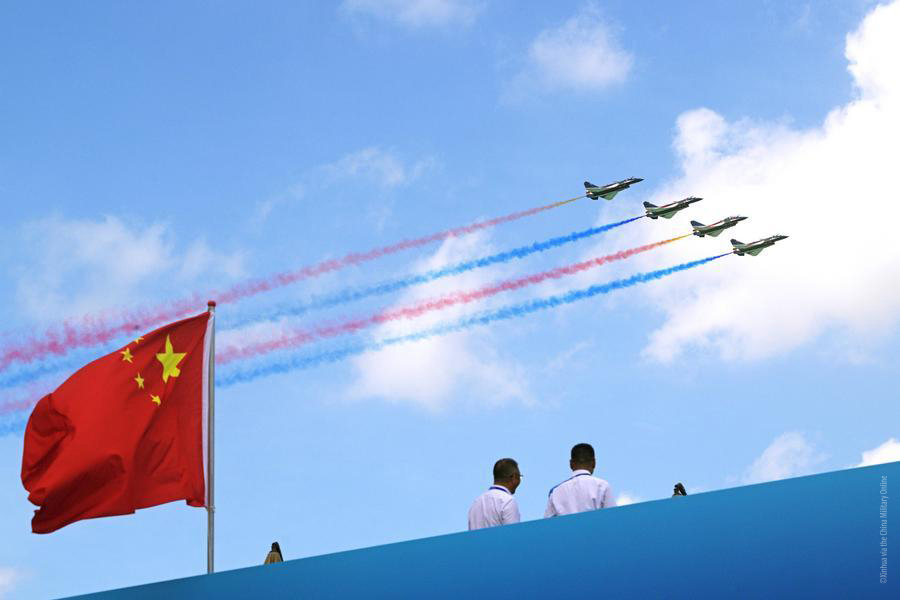
China is pouring substantial resources to modernise its military as it builds up its geopolitical might and economic influence in the world stage.
China’s rise as the second-largest economy in the world has drastically transformed the nation. Its surge from a low-income country in the 1990s into an upper middle income one in just two decades pulled millions of families out of poverty and hunger, and created mega industries that now fulfil one-fourth of the global demand for goods. These huge dollar inflows have enabled the Chinese Communist Party (CCP)-led government to also pour more resources into social services, including reinforcing national security further.
Military modernisation is at the heart of President Xi Jinping’s reform agenda as China steps up its unrelenting quest to claim Taiwan as part of the Mainland, despite Taipei asserting its unique designation as a self-governing region. This also comes alongside Beijing’s persistent sweeping claims over islands and features in the South China Sea despite falling within the jurisdictions of Southeast Asian peers like Indonesia, Malaysia, Philippines, and Vietnam.
Fortifying defence
China’s People’s Liberation Army (PLA) is the largest military force globally in terms of personnel size, with over 2 million soldiers in active duty. This should not be shocking for a country once known as the world’s most populous and where patriotism stands high. However, military funding falls a far second to the US, according to industry data.
The Chinese government ramped up defence spending in the 1990s, with military expenditure hitting a peak of 2.4 per cent of GDP in 1992.
Graph 1 shows that military expenditure relative to GDP has been broadly steady for major economies over the past 10 years except for Russia, which significantly hiked defence-related spending beginning in 2022 as it attacked Ukraine.

Taking a longer view, China’s allocations have since averaged at 1.7 per cent of GDP in the past 20 years, although actual amounts have grown drastically each year considering how fast the Chinese economy has been expanding. The nominal value of China’s annual military expense has risen from USD 42.79 billion in 2005 to USD 313.66 billion in 2024 – a sevenfold increase in two decades, per World Bank data.
Xi has consistently included military modernisation as a policy priority since assuming power in 2012 by supporting tactical equipment upgrades, upskilling of military personnel, and even weeding out corrupt officials within the ranks. A big chunk of yearly funding goes into stockpiling ammunition; research and development for a supposed military-civil fusion strategy; and the acquisition of “intelligent warfare”. In particular, the latter refers to the use of advanced technology to enhance defence operations across land, naval, air, space, nuclear, and cyberspace operations.
Military milestone
The year 2027 will be a critical test of how far ahead Xi and the CCP can take the Liberation Army as the force marks its centenary. This has raised fears of China’s potential invasion of Taiwan sooner than later, and the world is closely watching with global diplomatic relations at stake. For one, reports point to the construction of sprawling command centres in Beijing, which had been described as equivalent to 50 Pentagons of the US.
Graph 2 shows that more state funding is being earmarked for defence-related expenditures to reach nearly RMB 17 trillion (USD 245 billion) in 2024. This is equivalent to 5.9 per cent of China’s GDP that year, a share that has consistently risen over the last five years. Maintained spending on defence and its yearly ascent even during the global pandemic sends a clear message: China will not skimp on this policy priority even during periods when broader economic activity may be under threat.

The country has increasingly put defence airshows and military parades to showcase advances in combat equipment, including humanoid robots and autonomous systems. China’s ambitious Nantianmen project, which will come with a corresponding tourism theme park by 2027, is reportedly underway to compete with the US in aerospace defence.
A stronger defensive front is also China’s way of peacocking its might, especially towards the US. Washington sees Beijing as its sole competitor with the ability to “reshape international order”. This is no doubt acknowledging the substantial upgrades the country has poured into fortifying – or in China’s language, rejuvenating – its defence strategy. China is quickly catching up to the US as a global economic force, and the question now is: can it do the same and emerge as a defensive superpower?
An indirect but highly desired outcome in modernising the PLA is its carryover impact on economic growth, which China wants to see more of after some slowdown seen in the last two years. It also generates new opportunities for investments, although its appeal is limited to those investors with a higher risk appetite.