
China’s quest for semiconductor self-reliance
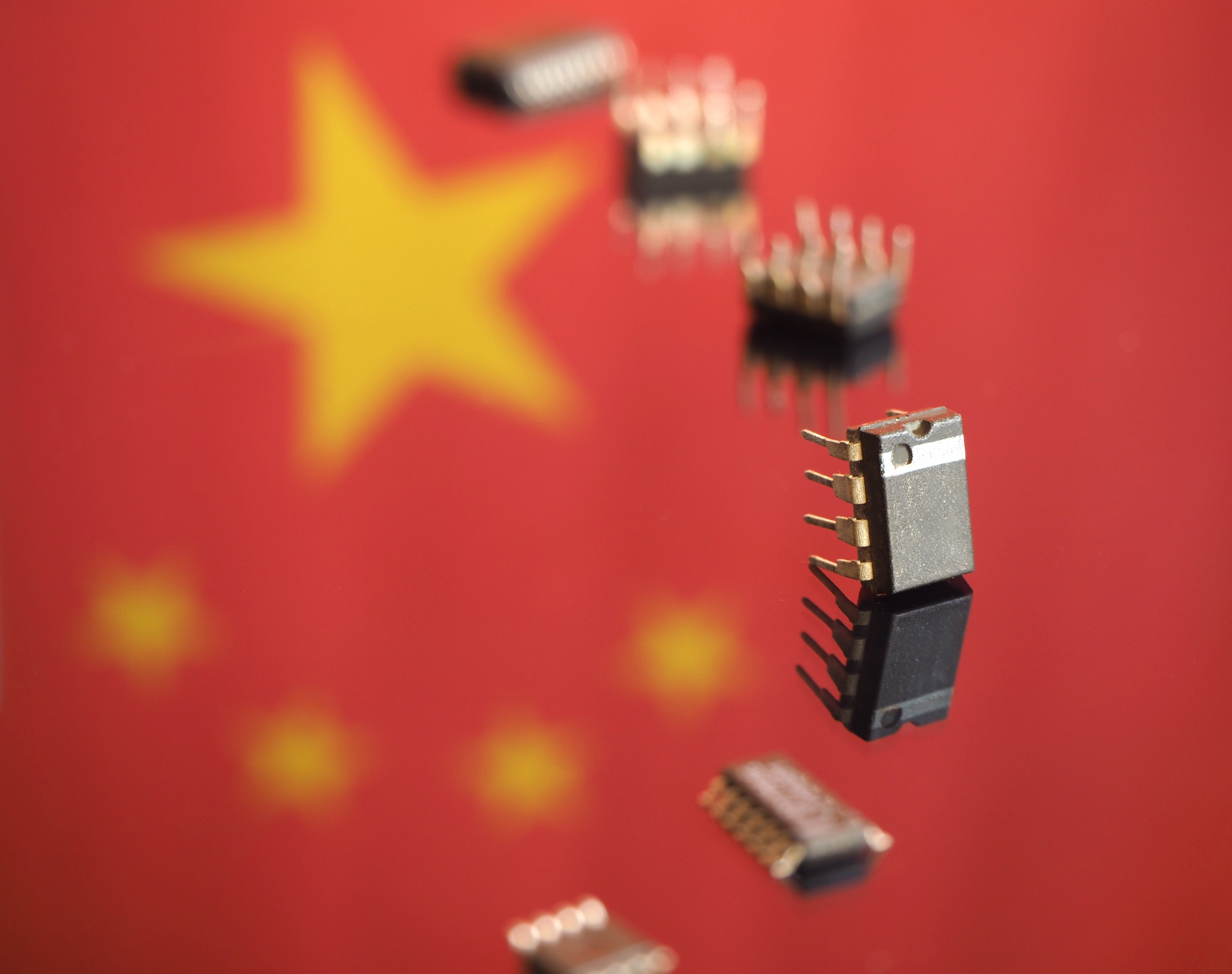
As far as high-tech manufacturing is concerned, China wants to build a one-way street: it seeks self-sufficiency in semiconductors while maintaining its position as a major global exporter.
China learned a hard lesson from the US when two successive American presidents tightened export protocols on semiconductors. As geopolitical tensions heated up, former President Joe Biden upped the offensive by prohibiting US-based chipmaking giant Nvidia from selling their then top-tier processors to China, citing national security grounds. This rule crossed party lines and had been kept by his Republican successor Donald Trump, who has made his disdain towards China public knowledge, until he withdrew the ban in 2025.
The US ban on high-grade chip exports to China was initially effective; it held off Mainland developers from leapfrogging in the global technology rat race, particularly within the generative artificial intelligence (AI) space. An unintended consequence was the creation of DeepSeek, a Zhejiang-based AI startup launched in January 2025 that was quickly deemed a worthy contender of the US’ ChatGPT. DeepSeek’s maiden R1 model runs on less powerful microchips and reportedly cost just USD 6 million to develop – less than a tenth of ChatGPT’s estimated USD 100 million development cost.
The excitement surrounding DeepSeek primarily lifted China stocks last year, riding high on the disruptive technology that challenged Silicon Valley greats. Although the software company remains privately held, it is a big step towards the right direction as far as the Chinese government’s vision for their economy – one where the Mainland evolves into a worthy challenger in the global tech arena.
Party vision
China’s 15th Five-Year Plan serves as the blueprint of policies and programs to be implemented by Communist Party leaders from 2026 to 2030. It identifies the need to develop “self-supporting and risk-resilient” industries particularly for segments like AI, hydrogen power, and even 6G mobile communications.
A sizeable portion of the Five-Year Plan discusses AI as one of the industries of the future, which must be accompanied by innovations in chips, software, industrial machines, and biomanufacturing for China to capitalise on. This is one of many critical steps that would make or break China’s penultimate “modernisation” goal of growing the economy to USD 30 trillion by 2035 – double its size in 2020 – which requires a consistent annual growth of above 4 per cent.
The Chinese Communist Party (CCP) is quick to act, starting with the requirement for domestic chipmakers to have at least 50 per cent of inputs and equipment in production be China-made. This forms part of a grander plan to be fully self-sufficient on semiconductors and develop a wholly integrated chip supply chain locally. China has some catching up to do in this space, as seen in Graph 1, considering that it trails in terms of global market share.

American semiconductor firms hold half of the global market share, with their reach broadening over the past five years based on industry data. Within China alone, US suppliers control nearly 51 per cent of the domestic market. China is a critical market for semiconductors, with the East Asian country being the largest single-country market worth 24 per cent of worldwide sales.
More than a trauma response to US export controls on semiconductors, CCP’s self-reliance push sounds well-founded. By requiring domestic manufacturers across all sectors to source China-made parts, it generates a snowball effect that will stoke domestic demand that, in turn, supports faster GDP growth.
Funding innovation
China is putting money where its mouth is by pushing for high-tech innovation. Total expenditure on research and development (R&D) more than doubled to RMB 3.6 trillion (USD 518 billion) in the last decade. Growth in R&D investments by Chinese businesses grew even faster, tripling from RMB 262.7 billion (USD 37.8 billion) in 2015 to RMB 766.9 billion (USD 110.3 billion) in 2024. Chinese high-value exports surged by 35 per cent over the same period, as shown in Graph 2.

Despite a steady uptick in R&D spending, one would notice a decline in aggregate exports of high-value technology products from China after peaking in 2021. This may be due to a slump in global demand after the COVID-19 pandemic, as well as escalating geopolitical issues affecting trade.
The Chinese government hopes to remedy this over the next five years by providing greater support to high-tech firms and small startups. China’s Five-Year Plan outlines additional tax deductions based on the R&D investments made by each company, as well as state purchases prioritising domestic manufactured goods to support the segment. So far, the self-reliance push is showing early gains, with a swathe of public listings and surging valuations for Chinese chipmakers in stock exchanges onshore and in Hong Kong.
Amid initial fears of an AI bubble – mainly regarding the multibillion-dollar investments made in the West – developments in China prove the opposite. While mature economies are trying to manage what is perceived by some as a potential oversaturation in AI financing, there is much room for tech-driven growth in Asia with Beijing leading the way. Additional resources poured into R&D will ultimately translate to innovation, creating high-quality, high-value goods that will push the frontier and meet ever-growing AI demand globally.
Semiconductor self-reliance may be a tall order for China and for any country altogether, but intent matters as far as the CCP’s economic goals are concerned. It is a step in the right direction, which reinforces our bullishness towards China. We stay overweight towards high-growth China equities, especially tech stocks, which remain undervalued in our view.