

How to deal with a deindustrialising Germany
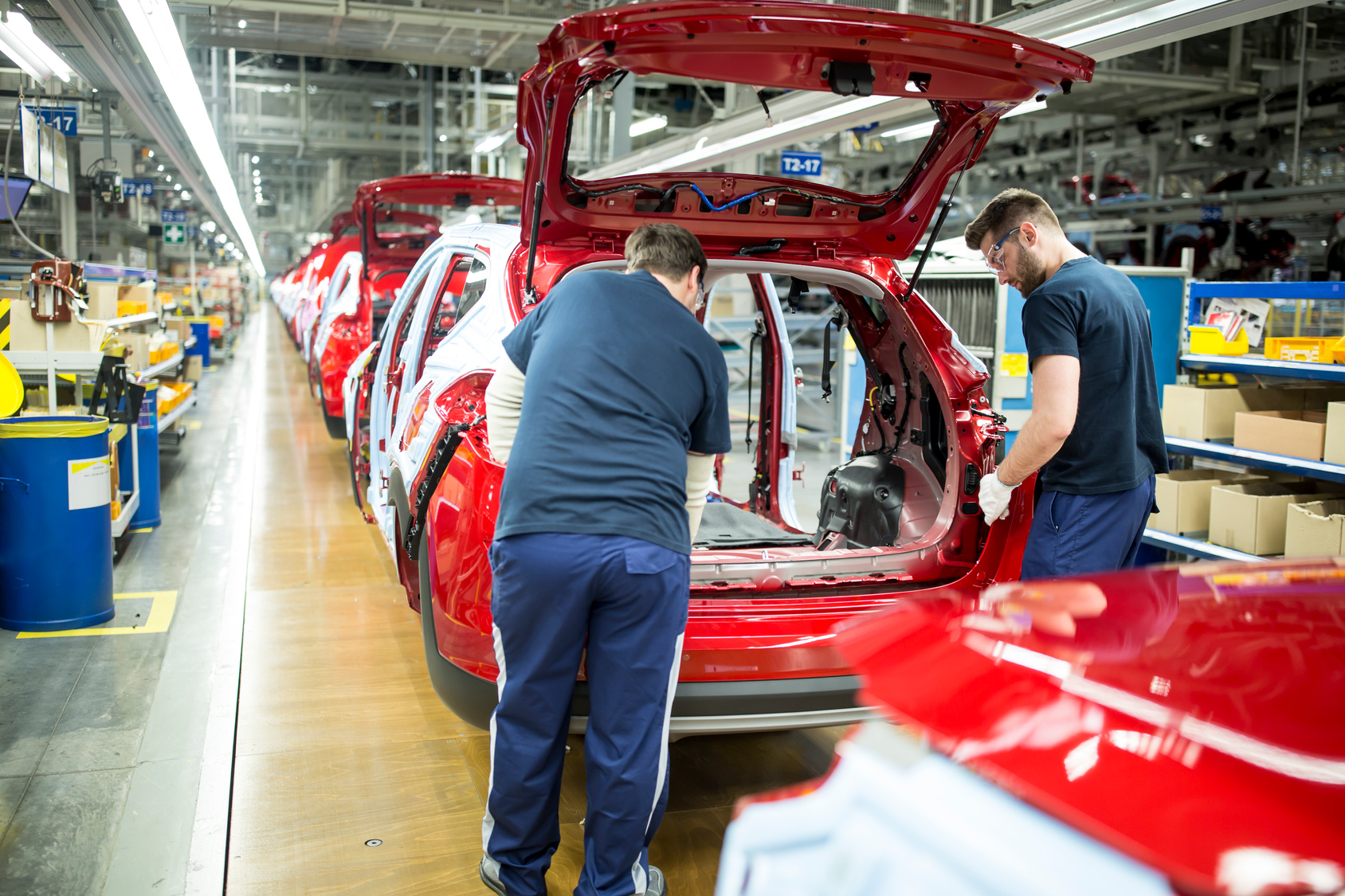
Germany’s manufacturing sector is in a decline, but this might not be the country’s biggest problem.
Internationally known for its large manufacturing sector with its reputation as a manufacturing powerhouse, Germany’s industrial base has provided stable incomes for households and corporates for decades. With it came the much-prided German export surplus, strong collaboration between workers and firms, as well as political stability. Unfortunately, this is not the case today as the industry maintains its descent: between 2019 and 2025, companies shed 5 per cent of its workforce, equivalent to more than 250,000 workers. Data also point to two straight years of output contraction since 2023, and 2025 is not looking good either.
The view that the manufacturing sector in advanced economies is declining and needs rescuing is shared amongst politicians and voters not only in Germany but in many countries. There are several reasons for this, but the biggest concern is the perception that manufacturing provides a dignified job with decent compensation for labourers. However, we argue that a manufacturing renaissance is not the end all, be all answer for Germany.
Deindustrialised development
Deindustrialisation – and as a result, falling employment – has become a megatrend across advanced economies, as seen in Graph 1. Germany’s share of manufacturing jobs to total employment fell from 47 per cent in 1975 to 18 per cent in 2023. Meanwhile, countries like the US or UK have been veering away from industry for the past century, and this is reflective of its now-smaller employment base at 10 per cent and 8 per cent of total employment as of 2023.

Germany’s manufacturing sector accounted for roughly 20 per cent of GDP in 2024, double that of the US, with the largest contributors being mechanical engineering, automotive, chemical, and electrical industries.
What makes these sectors so useful in an economy is its high productivity, which results in higher wages for its workers regardless of educational background. Between 1970 to 2021, Germany, as well as the EU and US for that matter, saw productivity growth in manufacturing consistently outperforming that of the services sector. Additionally, this provided a level of upward mobility for middle-income earners as they are able to earn much more than from other jobs. As such, deindustrialisation would also likely translate to lower productivity growth and innovation, as well as a hollowing out of middle-income jobs – and we are already seeing this occurring. Asia Pacific now leads the world in labour productivity growth at 3.6 per cent against 2 per cent for the EU in 2025. We have likewise seen developed economies confronting rising living costs, with lifestyles becoming less affordable as inflation outpaces wage growth. Meanwhile, emerging markets are quickly catching up as more people enter the middle class with fast-rising incomes.
Amid deindustrialisation, workers find that new jobs meant to replace obsolete manufacturing jobs often do not offer the same pay level, leading to wider regional decline and creating a negative spillover to other sectors that rely on manufacturing for production.
Why manufacturing’s time might be up
The decline in Germany’s manufacturing may just be the natural progression after leading GDP expansion for so long. Economic theory dictates that as economies prosper, this leads to a change in consumption patterns favouring services – after all, manufacturing could rely less on labour given rising factory productivity. Despite this logical progression, it is worth asking whether reviving manufacturing is sensible and cost-effective.

By comparison, service sector jobs pay relatively lower – but not necessarily because it is less productive. High-performing sectors like information technology (IT) have the potential to overtake manufacturing both in productivity and wages. Professionals like mechanics, electricians, or police officers are well-compensated regardless of a college diploma. Meanwhile, highly automated factory floors only offer menial jobs for those who have a degree.
It is true that for Germans, losing a manufacturing job typically means a lower income, but this is not due to the inherent disadvantage of the service sector. Rather, it is because workers’ skills are so occupation-specific that they either find it hard to adjust to a service sector job, and along with it, their earning potential declines.
The problem then seems to be less on the decline of manufacturing and more on the availability of quality alternatives. We also have to acknowledge that German firms are not necessarily world leading in the development of cutting-edge technologies. Even though Germany has decent research output, 85 per cent of it is initiated by the private sector, a much higher share than in other countries.
There is also a high degree of competition not only for labour-intensive jobs but also in high-tech areas. While companies are fast to blame the government for high taxes, bureaucracy, and labour costs, only taxes seem to have gotten significantly worse in the last years. Therefore, it might be time for Germans to wake up and look at what successful manufacturing companies are doing differently. One would notice that these businesses, while they are relocating production offshore to keep costs low, maintain a large part of knowledge-intensive activities and services like research and development, design, and marketing within the country. Industrial jobs are also becoming more like service sector jobs, so the logical step is to create better opportunities for the latter with competitive salaries for workers.
The real first step is to allow for a deep, structural change to happen. This requires that authorities stop pampering legacy industries and enable diversification towards high-tech sectors like IT and biotechnology to spur growth. Too often, industrial policy is slow to change, which results in artificially propping up sectors in decline instead of supporting high-growth segments. Assisting workers during the transition from one industry to another, such as through upskilling and reskilling programs, is also essential. Resisting this need to change would likely mean that the rest of the world is going to leave Germany behind. The question, therefore, is not whether manufacturing is going to decline, but how Germans can weather such a decline.
This original article has been produced in-house for Lundgreen’s Investor Insights by on-the-ground contributors of the region. The insight provided is informed with accurate data from reliable sources and has gone through various processes to ensure that the information upholds the integrity and values of the Lundgreen’s brand.