

The Eurozone flip
Greece is repaying its debt ahead of schedule and Italy is getting upgraded by Moody’s. Meanwhile, France lost another rating nudge and Germany’s economy remains frozen. It looks like the future in the Eurozone is somewhere else than it used to be.
On 21 November, Moody’s announced an upgrade of Italy’s long-term credit rating, raising it from Baa3 to Baa2; in S&P terms, it equals a step from BBB- to BBB. It is the first credit rating upgrade for Italy from Moody’s in 23 years, and a very important one as it is a step away from the feared junk-bond status, as the rating world below Baa3 is the no-go or junk-bond – or high-yield, to use a more pleasant phrase.
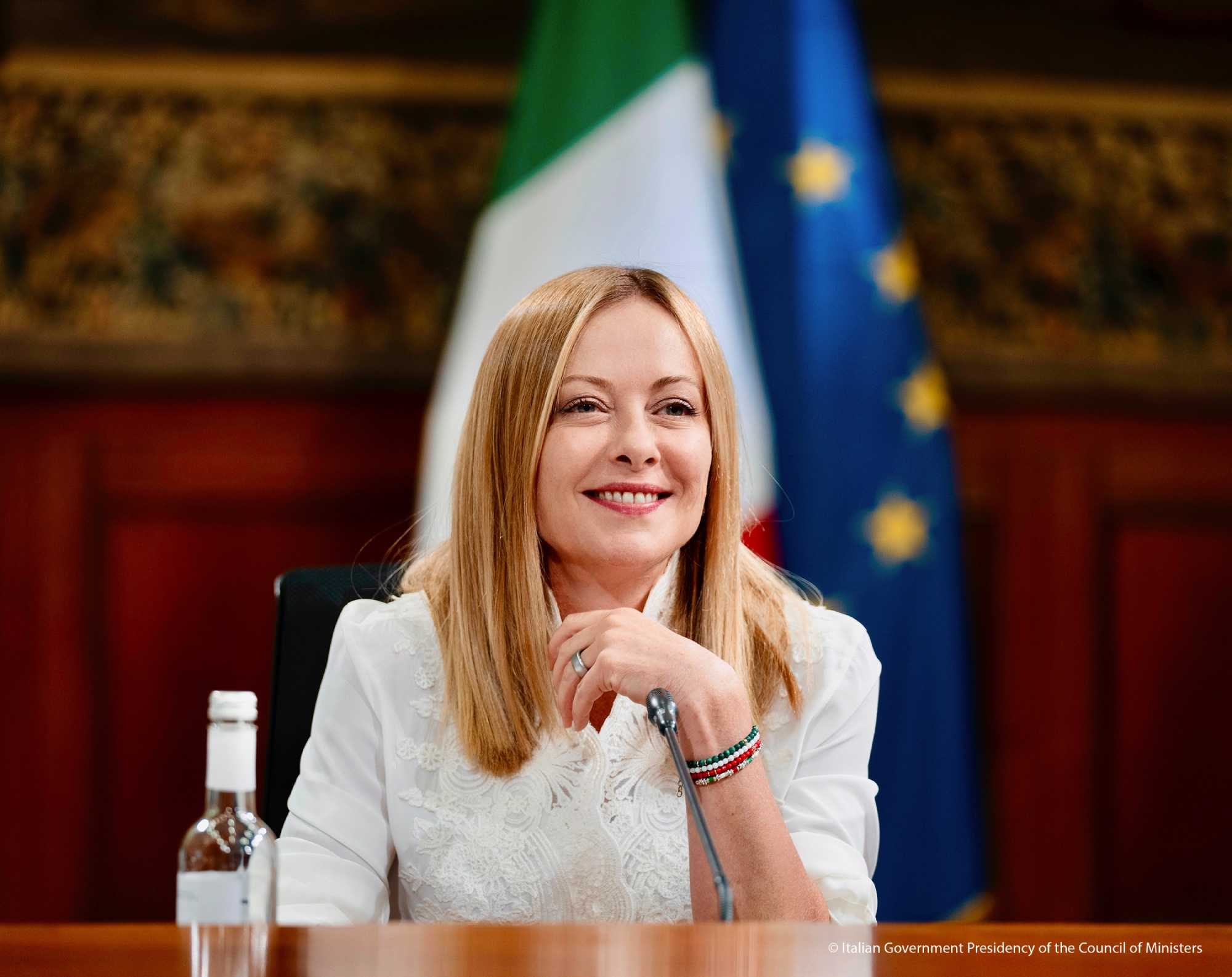
Prime Minister Giorgia Meloni has managed to create a stable government that deals with Italy’s challenges instead of spending time on political infighting, which has been a recurring problem for decades. While this alone is an improvement for the country, Meloni’s government has also created positive changes. Most importantly, it has proved its willingness to fulfil fiscal discipline where an important step is to reduce the budget deficit to below 3 per cent of GDP in 2026. Reform work has also been conducted to a certain, but not overwhelming, level. Italy has introduced pro-growth tax incentives and modernised some laws that make it more attractive for foreign investors to invest in Italy.
Some in Italy celebrate these steps as significant reforms and a big victory. With all respect for the initiatives, these are not substantial but are steps in the right direction, and it deserves applause. Even more interesting is how much improvement these relatively small initiatives can generate, which is particularly visible in the financial markets. A fine and important example could be found in the bond market, where the 10-year government yield traded 1.8 per cent higher than France just a few years back in 2022. Now, it has flipped with Italy currently trading at a lower yield than France, although a major share of that story is linked to the latter’s deep political and economic troubles.
Our key takeaway lies in Italy, wherein even small reforms and a decent economic discipline can lead to a relatively large macroeconomic effect. If Italy really wants to move forward with the reform work, they should look east towards Greece.
Greece as the role model
We have praised the reform work in Greece since mid-last year, particularly the labour market after it increased the permitted weekly work hours. This autumn, Greece added another flexibility in the form of longer working days. For the Greek government to increase work hours per day and the working days within 15 months is bravehearted and certainly deserves accolade. It is not that we argue that work hours and days per week must be longer; the reason is because the Greek government realized the absolute necessity of the move due to the ageing population and weak labour efficiency and productivity.
Since the “near-bankruptcy” situation during the global financial crisis in 2008-2009, public spending cuts in Greece have been a part of the economic policy. It is no surprise as such an economic meltdown automatically creates an environment of fiscal discipline out of sheer need. Public spending cuts alone rarely move a country out of the economic dark woods; more is needed, like reforms that can generate a particularly competitive platform for the troubled country. On 26 November, Greek Finance Minister Kyriakos Pierrakakis published a piece in the Financial Times about what Greece has been doing to reform the country. Naturally, any politician would like to highlight their own well-doing, but in all fairness, Pierrakakis actually has some bullets that can be of good inspiration to other fellow Eurozone countries.
Together with spending cuts, the top one solution in several Eurozone countries very basically is to increase the work hours per week, which also generates a natural reduction of the workforce in the public sector to the benefit of the private sector. For Greece, it means a fiscal budget surplus that allows the country to repay its debt ahead of schedule to save borrowing costs. It has been a big win for the country to digitise a part of the public sector, including the service for citizens such as the increased efficiency in tax collection. Other Greece-specific reforms are tax-related, including a diversified property tax to ease the burden for young families and to make rural areas more attractive again. Graph 1 includes an example of responsible government economic work in Greece, with some budget surpluses recorded over the past decade. There might be setbacks in the recovery plan like during Covid-19, but the economic recovery plan is back on track pretty fast.

Tables turned
On the contrary, France’s economy is simply not taken care of and public money is spent in an unbelievably irresponsible manner. The result is, for example, a credit rating demotion. Even worse is the economic swamp coupled with political unwillingness to improve the way forward. From an investor’s perspective, when looking at what has helped Italy and Greece regain investor trust, it is astonishing how straightforward and simple the political reform work needs to be.
The political leadership in France has managed to move the country into a position that we judge as “generally uninvestable”, and for years, we have warned against Germany missing reforms. An optimist might argue that what goes around comes around, and one day the German economy will find its way out of the current gloom like what Graph 2 shows. However, Germany’s frozen economy is very much caused by domestic issues and missed reform work by various governments, and the situation is now very critical.

It is not just a showbiz quick fix that is needed for the German economy; structural reforms are urgently in demand. This is the same reason why we argue that the German business sector cannot escape the current hopeless situation it has created for itself. By the normal swings in showbiz, making investments in Germany is less attractive – as long as this goes on, the Eurozone flip also moves forward where investing in Italy and Greece are becoming more attractive.