
China state-owned factories lead the charge
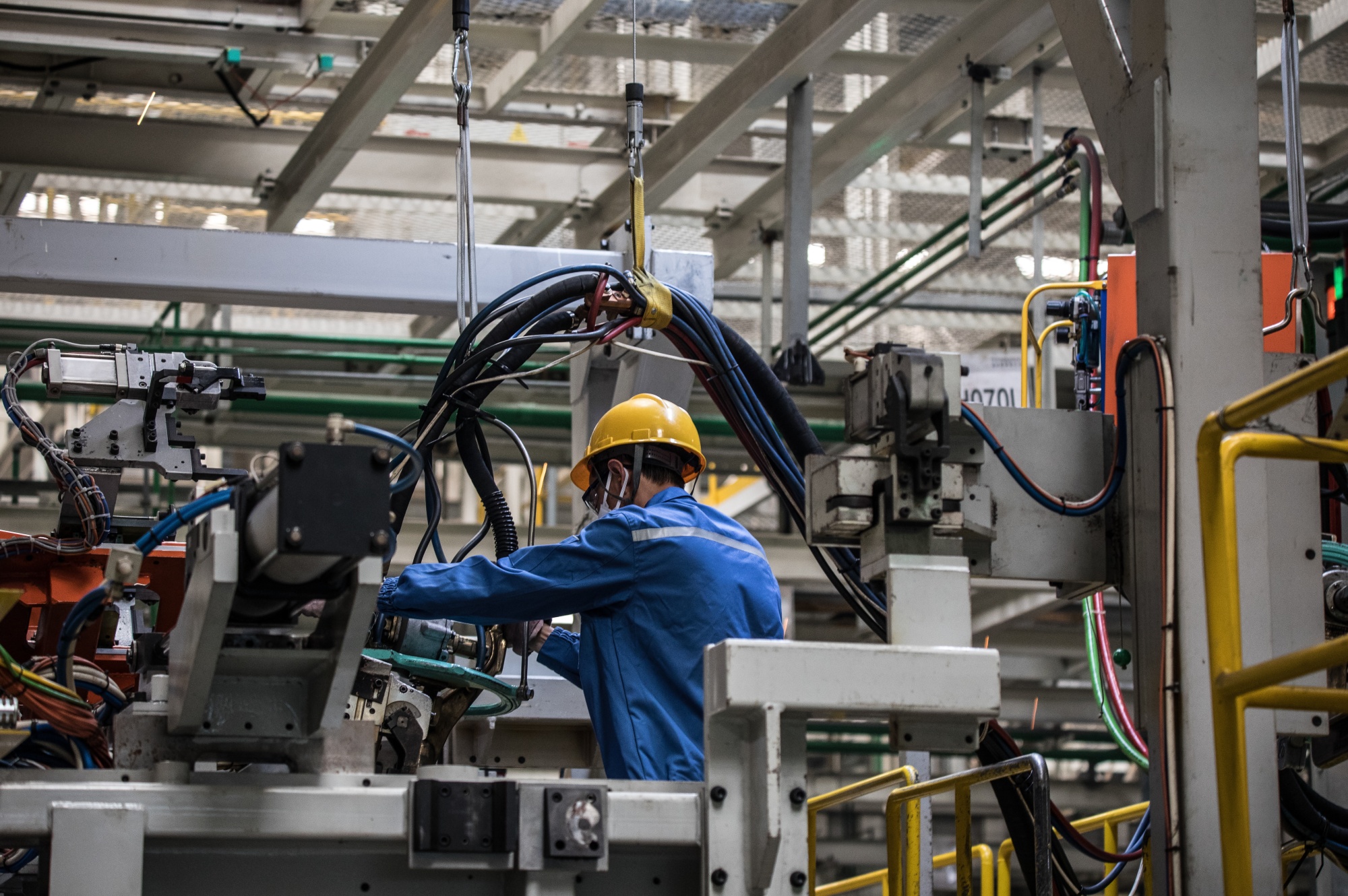
State-owned Chinese firms carry the heavier burden of keeping the country’s manufacturing sector on high growth mode. Is this sustainable?
The manufacturing sector is a key pillar of the Chinese economy, accounting for one-fourth of national output. It has drastically improved in efficiency and productivity that it now faces a persistent oversupply of goods – so much that it has driven both producer and consumer prices down.
Factories continue to chug ahead despite global trade disruptions. For an economy just recovering from an internal consumption slowdown, this meant that inventories have been piling up faster than they are sold. To wind down these stocks, some companies have resorted to mega discounts just to clear their warehouses and make way for new products. As a result, industry growth has slowed from a peak of 7.7 per cent in March and business profits have come under pressure. This oversupply of goods and the corresponding price reductions in China is a megatrend that we expect to be sustained in 2026.
State leads the way
One unique feature of China’s manufacturing sector is the prevalence of state-owned enterprises (SOEs). These government-funded producers have been taking the lead in recent months, and this strategy has its pitfalls. Graph 1 shows how SOEs have outpaced the growth in value added by their counterparts in the private sector beginning July.

This phenomenon is not new. In 2023, output growth had been largely driven by SOEs when the national government sought to lift domestic prospects following China’s property sector collapse. Beyond the profit motive, these state-owned companies also serve as an avenue to deploy fiscal stimulus in the face of economic headwinds. For example, fresh capital infusions push state-owned factories to produce more at faster rates, which will ideally jumpstart its competitors to do the same. During US President Donald Trump’s first presidential term, Chinese SOEs significantly reduced their purchases of American goods as part of Beijing’s retaliation to higher tariffs – a practice that deviates from standard business operations.
One can argue that faster industrial growth is always desirable, but we take exception to this view. For an economy as huge as China, there is every reason to be discerning as its momentum (or lack thereof) will most probably create ripple effects towards the rest of the world.
The operations of state-backed firms are primarily dictated by the Chinese Communist Party (CCP), which views these SOEs as instruments to steer the industrial sector towards achieving the long-term economic goals that the party has set. It provides the capital and makes business decisions for these SOEs – a conflicting concept given that the CCP’s ideology is far from the typical corporate strategy.
At Lundgreen’s, we are of the view that the conduct of big business should be left in the hands of the private sector, as they have the expertise to do it. The same principle governs our own Lundgreen’s Invest – China Fund, where we focus our allocations into privately-owned, high-growth companies in China.
Rapid production growth by SOEs – which receive additional funding to keep churning out goods even in the face of depressed consumer demand – may be a temporary fix to revive a slowing economy, but it simply cannot be the permanent gameplan. President Xi Jinping has since softened his ironclad grip on the private sector as the country seeks other growth sources after the US imposed sky-high tariffs on Chinese goods. Now that a longer US-China truce is in place, there is much room for privately held manufacturers in China to take the driver’s seat again to chart a sustainable way forward.
Export powerhouse
Setting aside our concerns on a state-decreed manufacturing expansion, industrial firms did well in finding new markets to unload their oversupply. The strategy is to send what they could not sell locally to other emerging markets abroad. A striking example is China’s surging shipments of gasoline-powered cars to Latin America, Africa, and parts of Eastern Europe – economies with a demand for mid-market vehicles and where infrastructure for electric cars remain limited. The biggest exporters are state-owned brands like SAIC, Dongfeng, and Changan, which were also the first to embrace the government’s EV focus at home.
Domestic auto makers set up new factories to build new energy vehicles – which includes both hybrid and fully battery-powered cars – to meet a spike in demand with the Chinese government’s trade-in subsidies for households to go green, all part of the CCP’s mandate to phase out fossil-fuelled units by 2035. This rapid shift has catapulted China as the king of both spaces: it now leads global exports of electric as well as internal combustion engine vehicles. As seen in Graph 2, exports of passenger vehicles have both risen through 2025, with shipments of gasoline cars up 52 per cent from January to October. Meanwhile, electric vehicle exports grew by 57 per cent during the same period.

The continuing growth in car exports bodes well for China in the face of weak domestic demand, with local automobile sales posting an accumulated 1 per cent decline as of November 2025. Total retail sales growth is likewise decelerating, and we will not be surprised if more manufacturers would opt to send bigger volumes for sale abroad. This fortifies China’s legacy as the global manufacturing powerhouse, but it seems that profitability is not guaranteed.
Lundgreen’s remains overweight on Chinese assets, but we recommend taking well-considered risks. In this scenario, this means looking beyond sales revenues when choosing companies to invest in. Instead, one should consider long-term profitability and business growth plans to secure the best returns.