
Indonesia’s lofty plans with Danantara
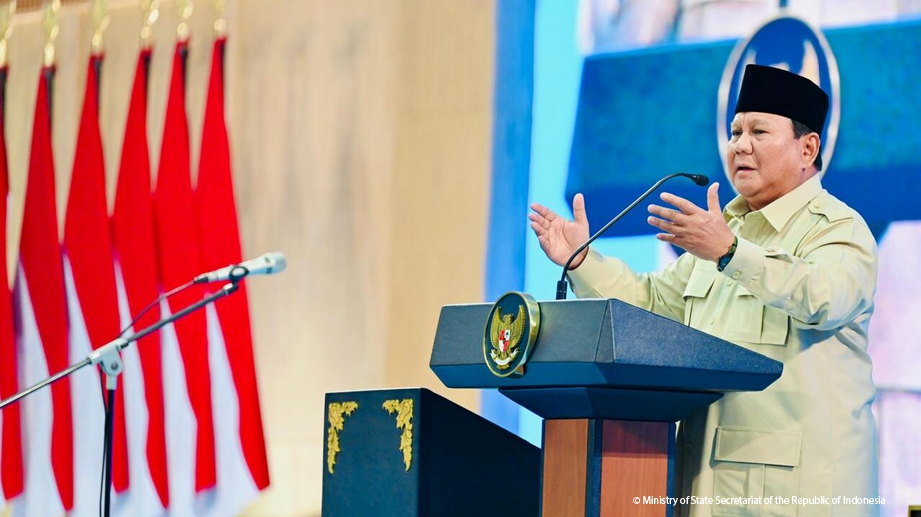
The launch of Indonesia’s new sovereign wealth fund, Danantara, has sparked debate as it draws funding from state-owned enterprises. Subianto’s government is painting it as a high-risk, high-reward fund to attract global investors and drive domestic growth.
A year has passed since President Prabowo Subianto introduced a new sovereign wealth fund (SWF) for Indonesia, the Daya Anagata Nusantara Investment Management Agency or Danantara for short. The fund’s aim is to optimise the capital and operations of state-owned enterprises (SOEs) to drive national economic growth, strengthen global competitiveness, and entice foreign investors. It currently stands as Indonesia’s national investment agency. Prior to this, Indonesia had another SWF called the Indonesia Investment Authority (INA). It was introduced in December 2020 by former President Joko Widodo.
To call the introduction of Danantara despite the existence of INA as purely political is inaccurate – after all, Subianto meant to continue Widodo’s legacy as his endorsed successor. These two SWFs share the same objective of encouraging foreign investors to invest but have different investment goals, with one more expansive than the other.
High stakes
Danantara has so far accumulated USD 900 billion in total assets and is expected to triple that number by 2030. At the same time, it has also gained some scepticism, such as the risk of crowding out private capital due to its ambiguous financing structure and the possibility of resource misallocation which may both harm domestic businesses. Uncertainties in investment strategies and risk management policies have raised eyebrows regarding the fund, alongside concerns regarding the lack of transparency.
Although it seems high-risk, Danantara has so far triggered a crowding-in effect to the Indonesian economy through global partnerships. In April 2025, Danantara and the Qatar Investment Authority announced that they will contribute USD 2 billion each as a joint investment in key domestic sectors like healthcare and renewables. Danantara also signed a USD 2-billion investment deal with China in May.
If we are to believe Danantara’s Chief Investment Officer, Pandu Sjahrir, the fund will run like a public company under the same model as Singapore’s Temasek – a highly successful SWF – and audited by independent auditors. This theoretically fulfils the promise that the fund will enhance the profitability of state investments and SOEs.
Graph 1 shows that while Singapore is ahead by a mile, Indonesia’s SWFs come second in terms of size of operations as it accounts for a tenth of total assets under management among ASEAN sovereign funds. As Danantara mimics Singapore’s model, foreign investors can expect good opportunities from its upcoming project ventures.

Another difference between Danantara and INA lies in how they run state-owned firms. Starting this year, INA will move towards forging non-SOE investment deals through global partnerships. Meanwhile, Danantara announced a rationalisation plan for SOEs, which will trim the number of operating state from over 1,000 to 200 as more than half are incurring losses. This restructuring could avoid the manipulation of financial reports from SOEs, in turn addressing transparency issues.
Projects under Danantara
The consolidation of SOEs under Danantara is transforming the fund away from bureaucratic regulation towards value creation across sectors. By reducing the number of SOEs, the goal is to cauterise any fiscal bleeding from underperforming businesses and reallocate capital towards well-performing businesses, with the expectation that it will also increase investment contributions to public coffers until 2029 and lift Indonesia’s economic growth.
There are a total of 18 projects currently prioritised under Danantara cumulatively worth IDR 168 trillion (USD 37 billion), with about half allotted for mineral and coal projects as seen in Graph 2. Danantara’s CEO, Rosan Roeslani, said the fund has allocated IDR 43.8 trillion (USD 2.8 billion) for mineral processing in West Kalimantan, where there is an abundance of bauxite, the source ore of aluminium.

Looking at Danantara’s energy projects, energy resilience is accorded greater value at nearly USD 14 billion while energy transition is valued at only USD 2.36 billion as the SWF is setting its sights on green energy. The fund recently signed a partnership with Saudi-based ACWA Power which has a potential value of USD 10 billion. This project hopes to attract more foreign capital towards investing in Indonesia’s green energy sector.
On the flip side, marine and fisheries as well as agriculture projects appear to be less of a priority compared to other industries. However, as Indonesia is currently pushing for food security, the government is hoping to bring more investments towards these types of projects.
Caution ahead
Of course, one should not disregard the concerns surrounding Danantara. Beyond the criticisms mentioned, the fund may further disrupt Indonesia’s national budget priorities. Already, there have been major slashes on funding for public essentials, such as a 24 per cent cut on elementary education funding, 39 per cent reduction on higher education funding, 18.5 per cent on the healthcare sector, and 73 per cent on public works and infrastructure projects.
An argument can be made that Subianto did not abandon these social segments. For the education sector, the government has committed 20 per cent or IDR 757.8 trillion (USD 46.8 billion) from the current budget, a level said to be the highest in history. Meanwhile, allotments for the healthcare sector are expected to increase from IDR 218.5 trillion (USD 13 billion) in 2025 to IDR 244 trillion (USD 15 billion) in 2026. As for infrastructure projects, the government is pushing for the private sector to invest through projects endorsed under Danantara and INA.
Danantara may sound like a smart move on paper, especially if it is able to realise its goals of streamlining capital and operational efficiency of SOEs. Still, there are reasons to be cautious and as such, we continue to watch developments in this space with much caution.
This original article has been produced in-house for Lundgreen’s Investor Insights by on-the-ground contributors of the region. The insight provided is informed with accurate data from reliable sources and has gone through various processes to ensure that the information upholds the integrity and values of the Lundgreen’s brand.