
Brazil and the pendulum swing of shifting tariffs
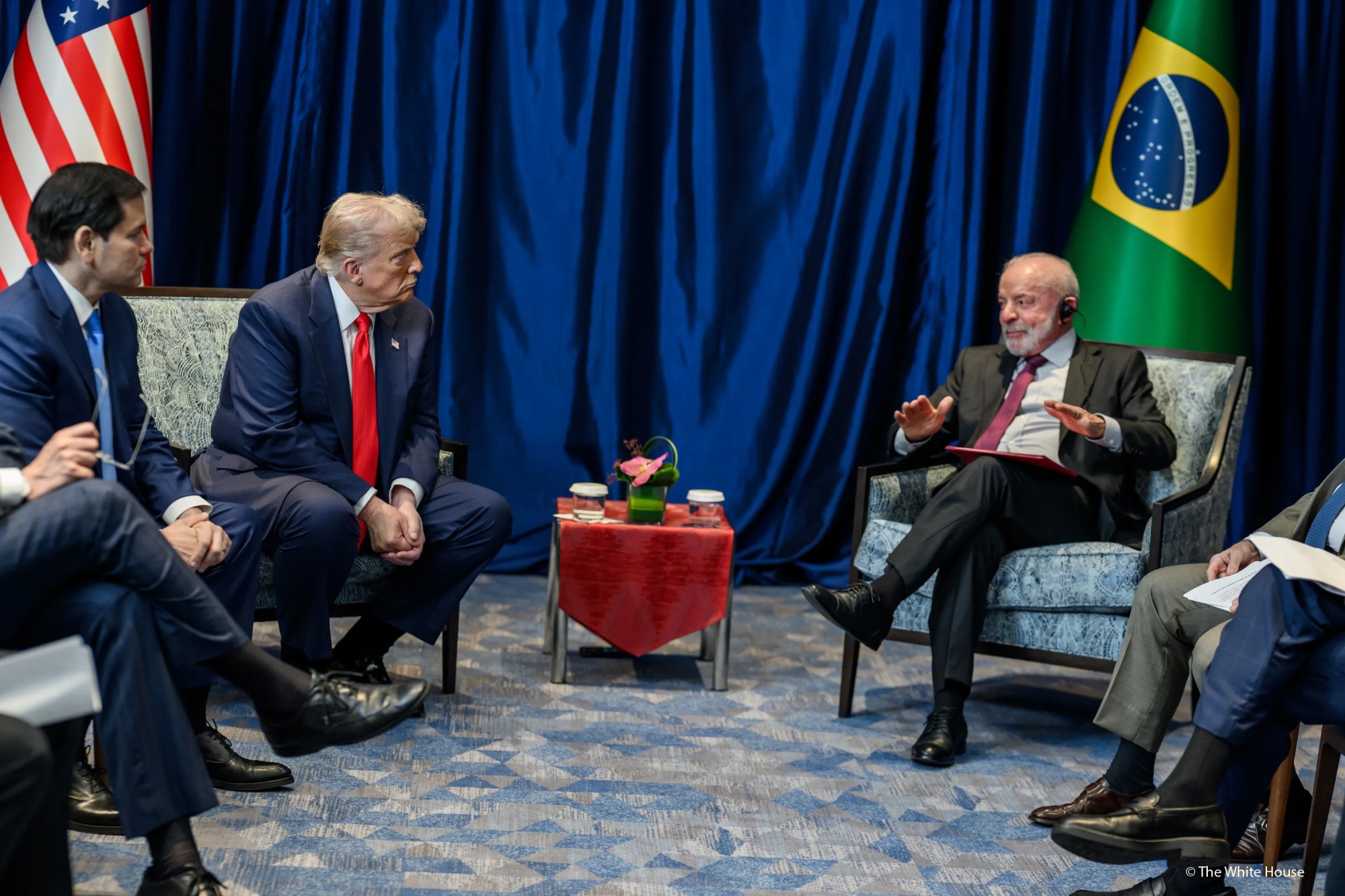
Trump is doubling down political pressure on Brazil to get what he wants, at the cost of trade flows between the two nations.
Tensions have escalated between Brazil and the US after President Donald Trump’s 50 per cent tariff on Brazilian imports took effect on 6 August. Trump was protesting the government’s treatment of former Brazilian President Jair Bolsonaro, who is currently under investigation for allegedly plotting a coup, to justify the tariff increase. In November, however, representatives of both countries reached an agreement that rolled back the duties on 249 Brazilian products, reducing the rate to 10 per cent. This flip-flopping tariff policy has been much abused as a bargaining tool – how does it affect the Brazilian economy?
Redirecting exports
To understand the impact, it is important to examine US’ role in Brazil’s export flows. Graph 1 shows that approximately 60 per cent of Brazilian goods went to neighbours in South America and to China this year, while exports to the US accounted for 16 per cent. Compared to 2024, the US’ share fell by about 12 per cent, while exports to China increased by 2 per cent and to the rest of Latin America rose by more than 11 per cent. For one, shipments of grapes to the US during the third quarter of 2025 registered an almost 68 per cent in volume compared to the same period in 2024, highlighting the challenges faced by Brazilian producers and exporters.

The April tariff list included many agricultural goods such as coffee and beef, the core of Brazil’s exports to the US. This was partially retracted, which should have positive effects on Brazil’s trade balance and help reduce exchange rate pressures due to increased dollar inflows.
Trade war and inflation
For the domestic market, the impact of the tariff rollback is expected to be marginal. After the duties were raised, part of the goods no longer absorbed by US consumers became available as domestic supply, pushing beef prices lower. With the partial stabilisation of trade, we expect this downward price pressure to ease. However, the overall inflationary impact will likely remain limited, and market expectations for the Broad Consumer Price Index (IPCA) will stay at 4.3 per cent for 2025 and 4.5 per cent for 2026.
For the US, the tariff situation has a much larger inflationary impact. Brazil is their largest supplier of coffee and one of their main suppliers of meat, both of which are currently experiencing high inflation in the American market. In effect, this also exerts political pressure on the Trump administration as the tariffs run counter to his promise to pull prices down.
Given a fragile labour market and weakening household demand, the US Federal Reserve cut interest rates in its final meeting of the year. However, the debate persists over reducing borrowing costs while inflation remains elevated; even so, concerns about job losses and wages will likely push the central bank towards another rate cut.
Market volatility and election concerns
After seven consecutive rate hikes, the Brazilian Central Bank (BCB) held its benchmark interest rate at 15 per cent — the highest since 2006 — throughout the second half of 2025. Although markets do not expect an easing cycle to commence, forecasts suggest rate cuts towards the end of the first quarter of 2026. The committee is also expected to soften its previous communication, which had emphasized keeping rates elevated for an extended period. Additionally, another rate cut in the US could strengthen the case for Brazil to bring their own interest rates down sooner.
One positive development is the appreciation of the Brazilian real against the US dollar, which is seen in Graph 2. This trend reflects growing investor distrust in US fiscal and trade policies, as well as Brazil’s attractive interest rate differential. Improved investor perception towards Brazil relative to other emerging markets has also supported the currency and helped lift the stock market. This positive perception and the optimism in the Brazilian stock market can attract more risk-taking investors.

The BCB committed to keep the Selic rate steady for “a very prolonged period”, which can slow appreciation in the short term; the overall trend is expected to continue for the next two to three months.
High-interest-rate environments create favourable opportunities in the fixed income market. Treasury bonds such as the IPCA+ 2029 currently offer real returns of about 8 per cent per year. For investors with more conservative strategies, bonds provide stability and reliable returns, especially in the context of ongoing domestic political risks and global economic headwinds. With upcoming elections and ongoing uncertainty over future economic policies, we see some investments remain relatively insulated and therefore appealing.
The markets also remain concerned about the Brazilian government’s commitment to fiscal responsibility. The federal government is expected to increase spending in the coming months, particularly via expanded social programs, to regain popularity ahead of the October 2026 presidential elections. Higher government spending could push inflation upward yet again, reinforcing incentives for the central bank to maintain high interest rates for an extended period.