

Outsized German borrowing continues to derail the economy
While increasing debt levels are reason to look closer at government finances, missing public investment is the real danger in the years to come.
Whether you look at the US, Germany, or France, leaders of advanced economies seem to have found the appetite to borrow heavily. With the average government debt-to-GDP ratio in advanced economies reaching 110 per cent, it might be time to ask how long this spending spree can continue.
It is only a question of when the next crisis hits and governments will be forced to increase their borrowing again, further bloating their debt burden beyond the productive capacity of the respective economies. The resulting spike in borrowing costs, combined with weak growth, can erode market confidence and trigger interest rate hikes that could push government debt to spiral out of control that would require years of fiscal austerity thereafter.
Germany is a prime example, having passed an amendment to the constitution that allows it to borrow EUR 500 billion (USD 587.7 billion) to fund infrastructure projects and excludes all military spending above 1 per cent of GDP from its formerly strict debt brake. If the past is a guide for the future, reducing the debt burden might indeed be tricky and requires solid growth and strong political will. For investment-starved Germany, its mounting debt might not be the greatest challenge in the future: it is if the politicians can spend the money productively at all.
Dealing with debt
The worst-case scenario of a debt default is a very strong argument for Germany to borrow prudently. On the broadest level, debt is just a tool to finance government spending without having to increase taxes immediately. To pay back the borrowed money, the government has to reduce its spending or raise more taxes in the future, thereby limiting the positive effect of borrowing.
This is not always the case: a preferred scenario is when the interest rate on such debt is lower than the GDP growth rate, which makes it more affordable. In this situation, it is common for the government to roll over its debt without the need to increase taxation or limit public spending. As the economy grows, the debt-to-GDP ratio will automatically shrink over time.
Additionally, piling public debt could exhaust limited financial resources and increase the interest rate borne by private companies on their own loans. Such an effect is more pronounced the higher the outstanding amount of government debt, with studies finding that a debt burden of 60 to 90 per cent of GDP is largely growth-negative. Germany faces this exact conundrum with a 63.9 per cent debt-to-GDP ratio in 2024, as seen in Graph 1.

Governments often need to spend more to grow more. The general solution is to allow governments to resort to lending to manage economic downturns as an alternative to raising taxes immediately. They can also borrow to fund productive investments while limiting government consumption.
There is no way to pin down how much debt an economy could handle, although developed economies such as Germany have the advantage of providing a safe and stable assets that many investors seek, even if their debt level rises above a certain threshold. It appears then that the most important consideration regarding aggressive government borrowing is for governments to leave some capacity to borrow in the future so they still would still have flexibility to manage economic downturns when needed.
Behind in investments
Looking at Germany’s relatively low debt-to GDP ratio, there is space to increase spending in the future to support overall growth. However, decades of perceived superiority over the debt load of its European neighbours, attempts towards debt reduction, and overall complacency make Germany less desirable to invest in – something the country needs in order to correct structural weaknesses in its economy.
Current estimates of much-needed public investments amounts to EUR 600 billion (USD 704.2 billion) until 2035 or EUR 100 billion (USD 17.4 billion) per year in the near future. This is due to years of 2-3 per cent gross public investment per year, a level that’s among the lowest of the OECD countries. Even more worrying is the slow rate of public infrastructure modernisation, which has declined over the post-unification years.
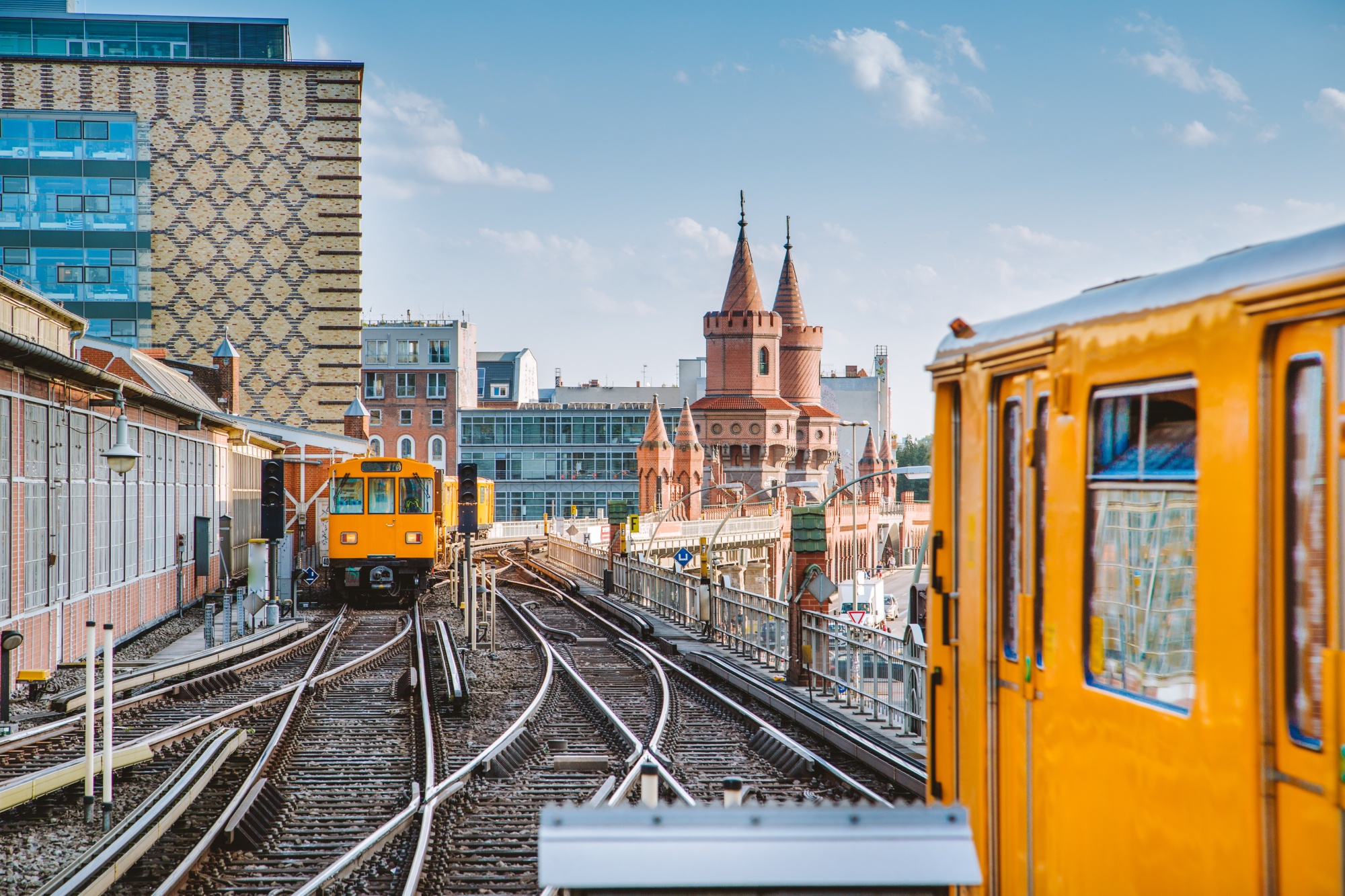
Looking at net public investment in Graph 2, Germany has barely managed to build more capital than it depletes over the years. Representative of this fact is the country’s national railway, Deutsche Bahn, which had a low punctuality rate of 62.5 per cent in 2024 due to its outdated infrastructure. It is not too much debt; rather, too little investment that should worry Germany.

Given this monumental challenge to modernise the German economy, it is of vital interest how fiscal allotments for infrastructure are being spent. Investments in transportation, digitalisation and energy infrastructure are currently part of this year’s budget, forming part of the EUR 500 billion (USD 587.7 billion) augmentation. The German Council of Economic Experts has reported that only around 50 per cent of the fund is actually spent on additional investments, leading to a far smaller growth boost relative to the original version. Despite the report, the coalition is handing out subsidies to limited constituencies left and right.
Given the additional investments, the German debt-to-GDP ratio is projected to stabilise at a level of 80 to 90 per cent, still well below peers. Instead, it is the current government coalition fumbling Germany’s modernisation which should worry voters. Economic experts across the political spectrum agree on what must be done. However, politics is politics: the government would rather waste money on low-hanging fruit than get the literal German train back on track.