
Keeping Malaysia’s budget on track
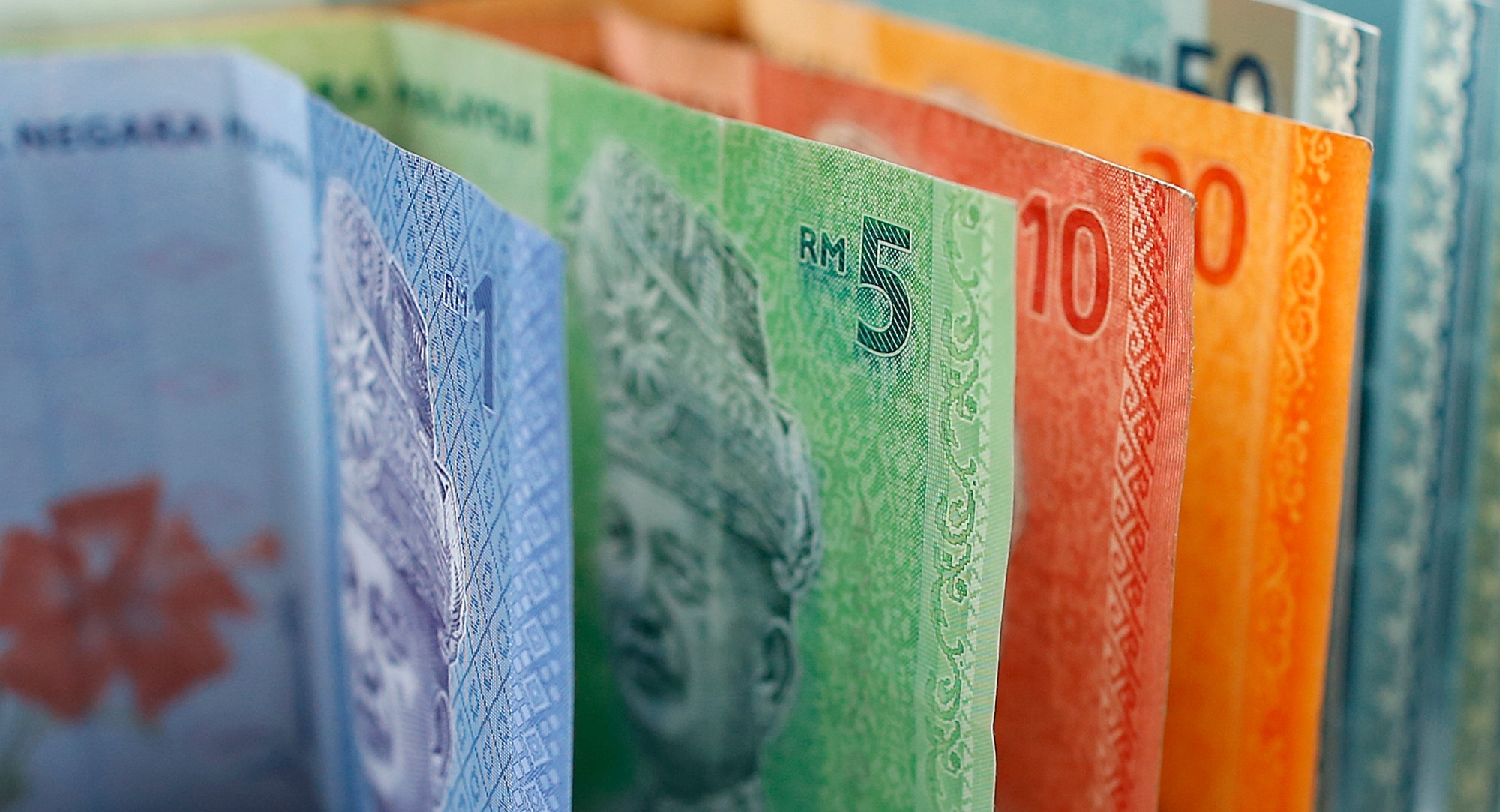
In 2023, Malaysia introduced the Public Finance and Fiscal Responsibility Bill to avoid overspending. Can the national budget keep up with the people’s needs given this constraint?
On 10 October, Malaysian Prime Minister Anwar Ibrahim revealed the 2026 national budget which amounts to MYR 470 billion (USD 113.7 billion). This marks the biggest annual spending plan for the country on record.
Ibrahim, who also sits as Finance Minister, has taken strides to reform Malaysia’s public finance and economy. To ensure that the public funds under his administration is on track, Ibrahim introduced The Public Finance and Fiscal Responsibility Bill 2023. Since the bill’s enactment, Malaysia has maintained a strong economic position, making its fiscal deficit target of 3.5 per cent realistic – that is, as long as the economic reforms, including subsidy rationalisation and a broadened tax base, are maintained. Yet, the federal government debt this year has risen from last year’s MYR 1.24 trillion (USD 300 billion) to MYR 1.3 trillion (USD 314.6 billion).
Productive spending
The Malaysian government will need to control deficit spending to narrow the gap to 3 per cent of GDP in the next three years. However, they will also need to shell out more to attract more investors and stabilise the domestic economy. For instance, the government will be allocating MYR 611 billion (USD 147.9 billion) to the 13th Malaysia Plan, a five-year national roadmap from 2026-2030 to boost both domestic spending and stoke foreign investments. The rest of the roadmap seeks to bridge the development disparity between Malaysian states, which is pronounced when comparing rural and urban locations.
According to the International Monetary Fund, Malaysia’s real GDP is forecast to grow by 4.5 per cent this year before slowing to 4 per cent in 2026. Despite the dip, the government is still optimistic that the economy will chug ahead and manage a 4.8 per cent expansion given favourable trade conditions and a reduction in subsidies, mainly for fuel – the latter meant to reduce fund leakages and free up public resources for other spending priorities.
As seen in Graph 1, government consumption accounts for some 12-15 per cent of Malaysia’s GDP. Government consumption, which includes spending on government workers’ salaries as well as supplies and service availments during the first nine months of 2025, amounted to MYR 158.97 billion (USD 38.5 billion). Thus, there is good reason for Kuala Lumpur to look closely as to how productive government spending is as it seeks to sustain its high growth trajectory.

Malaysia’s budget pivot
Malaysia’s 2026 budget is a 3.9 per cent increase from its previous budget of MYR 452.2 billion (USD 109.4 billion). With the increase, the government is implementing fiscal reforms to strike the tough balancing act of supporting its citizens while also stimulating greater economic activity. In 2024, the combined budget for development and operating expenditures amounted to MYR 421 billion (USD 101.9 billion), but with the 2025 budget, it has gone down to MYR 412.1 billion (USD 99.7 billion). Next year, public spending on development and government operations will rise slightly to MYR 419.2 billion (USD 101.4 billion), which is still lower than the 2024 allotment. The adjustment implies that the government will be spending more judiciously on critical sectors.
Graph 2 shows that the bulk of next year’s budget will be dedicated to operating expenditures to support Malaysia’s civil servants, including a 7 per cent increase in basic salaries. However, this has been met with criticism: former Minister of Economy, Rafizi Ramli, questioned Ibrahim’s priorities for development expenditure. He pointed out that the majority would fund transport projects totalling MYR 17.5 billion (USD 4.2 billion), whereas the agriculture sector will receive a meagre MYR 550 million (USD 133 million), equivalent to about 1 per cent of the allocation for development-related spending.

One interesting provision to look at is funding towards Government-Linked Investment Companies (GLICs). For instance, the federal government funded MYR 30 billion (USD 7.3 billion) for strategic projects such as the development of the semiconductor and renewable energy industries. Another GLIC priority is the administration of a Climate Fund, which amounts to MYR 2 billion (USD 484 million).
Attracting ASEAN businesses
One unique aspect of the Malaysia Budget 2026 is the introduction of the ASEAN Business Entity (ABE), which seeks to attract more investments into the country by offering an Investor Pass – a multiple-entry visa valid up to 12 months for foreign investors. Nazir Razak, chairman of the ASEAN Business Advisory Council Malaysia, believes that the ABE can make Malaysia a preferred destination for multinational corporations in their plans for regional expansion and encourage intra-trade supply chains within Southeast Asia. This could be a game-changer for both regional businesses and foreign investors, especially those building a presence in Malaysia as it chairs the ASEAN Coordinating Council this year.
After the pilot of the New Investment Incentive Framework (NIIF) this end-2025, the government will fully implement the plan next year for the manufacturing sector in the first quarter, followed by the service sector in the second quarter. The framework will focus on high-value areas such as semiconductors, energy transition, and the halal industry, as well as sectors included in the New Industrial Master Plan 2030. To ensure that Malaysia stays technologically competitive, the government will provide a 50 per cent tax deduction for small and medium enterprises within the artificial intelligence and cybersecurity space. Targeting these sectors is correct given the immense growth potential for these sectors.
We think Malaysia’s attempt to position itself as a regional hub would be growth-positive, especially as it enjoys robust economic growth and capitalises on the ASEAN’s huge consumer market with rising incomes and increasing purchasing power. Public spending that would stoke additional domestic activity will provide support to Malaysian financial assets, and this bodes well for investments towards the region.